

Choosing between a wheelchair and a transport chair can be confusing, especially when selecting mobility equipment for an elderly parent.
Both provide seated mobility and many models fold for storage, but they are designed for different situations. A transport chair is mainly intended for caregiver-assisted movement, while a self-propelled wheelchair can allow the user to move independently when they have the strength and coordination to do so.
The right choice depends on how independently the person can move, how long they will remain seated, where the chair will be used, how often it will be transported and whether a caregiver will always be available.
Quick Answer: Wheelchair vs Transport Chair
A transport chair is usually the better option when:
- A caregiver will always push the user.
- The chair is mainly needed for short trips or appointments.
- Low weight and compact storage are priorities.
- The chair will regularly be lifted into a car.
- It will mostly be used in airports, clinics, shopping centres or other smooth environments.
A
manual wheelchair
is usually the better option when:
- The user wants the option to propel independently.
- The chair will be used regularly.
- More seating support or adjustability is required.
- The user may travel without a caregiver.
- The wheelchair needs to suit a wider range of everyday environments.
The main difference is simple: transport chairs normally have small rear wheels and require an attendant, while self-propelled manual wheelchairs usually have large rear wheels that the seated user can reach and push.
Wheelchair vs Transport Chair Comparison
| Feature | Transport Chair | Manual Wheelchair |
|---|---|---|
| Who moves it? | Caregiver or attendant | User or caregiver |
| Rear wheels | Usually small | Usually larger on self-propelled models |
| Self-propulsion | Normally not possible | Possible on self-propelled models |
| Weight | Generally lighter and more compact | Varies by frame and configuration |
| Car storage | Usually easier | Many folding models can also fit easily |
| Seating options | Usually more basic | More options may be available |
| Best for | Short assisted journeys | Regular or independent mobility |
| Outdoor use | Best on smooth surfaces | More configurations available for varied use |
| Caregiver required | Yes | Not always |
Not sure which configuration suits your family member? Compare available wheelchair types and models before choosing a specific chair.
What Is a Transport Chair?
A transport chair, also called a transit wheelchair or transport wheelchair, is a lightweight mobility chair designed primarily to be pushed by another person.
It normally has small front and rear wheels, push handles and attendant-operated brakes. Because the rear wheels are small and usually not positioned for hand-rim propulsion, the seated user generally cannot move the chair independently.
Transport chairs are commonly useful for:
- Moving between home and a vehicle
- Hospital or clinic appointments
- Shopping-centre visits
- Airport travel
- Short family outings
- Temporary mobility needs
- Situations where a caregiver is always available
Their compact design can be especially useful for families in Dubai and across the UAE who regularly use lifts, apartments, narrow indoor spaces or vehicles with limited boot space.
What Is a Manual Wheelchair?
A self-propelled manual wheelchair normally has large rear wheels with hand rims. When the user has sufficient strength and coordination, they can push these rims to move, turn and slow the wheelchair independently.
Most manual wheelchairs can also be pushed by a caregiver using handles behind the backrest.
A manual wheelchair may be more suitable when the user:
- Wants greater independence
- Will use the wheelchair frequently
- May remain seated for longer periods
- Requires a wider seat or greater weight capacity
- Needs removable or adjustable components
- Will not always have a caregiver available
Some lightweight manual wheelchairs combine self-propelling rear wheels with attendant handbrakes, giving both the user and caregiver more flexibility.
Which Is Better for an Elderly Parent?
The answer depends mainly on independence, caregiver support and how the chair will actually be used.
Choose a Transport Chair When
A transport chair may be suitable when your parent can still walk short distances but becomes tired during longer outings and a caregiver or family member will always be available to push the chair.
It may be particularly useful for:
- Medical appointments
- Shopping trips
- Airport terminals
- Moving between an apartment and a car
- Short periods of assisted mobility
Choose a Self-Propelled Wheelchair When
A self-propelled wheelchair may be more appropriate when your parent wants the option to move independently or expects to use the wheelchair regularly at home and in the community.
It can also provide more flexibility when both the user and caregiver may need to operate the chair at different times.
Consider an Electric Wheelchair When
If the user cannot comfortably propel a manual wheelchair but still wants independent mobility, it may be worth comparing
electric wheelchairs.
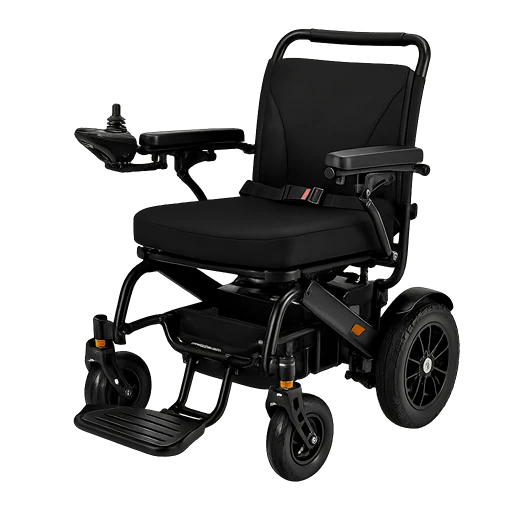
Electric wheelchairs use powered motors and are usually controlled by a joystick. However, battery range, charging, wheelchair weight, seating, vehicle transport and the user’s ability to operate the controls should all be considered.
Learn From Real Mobility Experiences
Product specifications and comparison tables are useful, but real experiences can also help families understand the practical questions that matter once a wheelchair or transport chair becomes part of everyday life.
The
Gilani Mobility Community
shares mobility and accessibility stories, videos and experiences from wheelchair users, People of Determination, seniors, families and caregivers.
These stories can help families think about real-life considerations such as caregiver handling, travelling with mobility equipment, independence, comfort and accessibility in everyday environments.
Individual experiences should not be treated as medical advice or as proof that the same wheelchair will suit every person. The user’s mobility, seating and support needs should always be considered individually.
7 Questions to Ask Before Choosing
1. Can the User Propel the Chair Independently?
This is usually the most important question.
A transport chair is not suitable for someone who needs to move independently because it normally requires another person to push it.
If the user has suitable upper-body ability and wants more independence, a self-propelled manual wheelchair may be a better choice.
2. How Long Will the Person Remain Seated?
A compact transport chair may work well for a short appointment or journey, but it is not automatically the right option for several hours of daily sitting.
For longer periods, consider:
- Seat width
- Seat depth
- Backrest height
- Cushioning
- Armrest position
- Footrest position
- Postural support
Someone who spends much of the day in a wheelchair may require a more detailed seating assessment rather than a basic travel chair.
3. Where Will the Chair Be Used?
Think about the actual journey instead of choosing only from product photographs.
| Environment | What to Check |
|---|---|
| Home or apartment | Door width, lift dimensions and turning space |
| Shopping centres | Manoeuvrability, comfort and secure brakes |
| Clinics and hospitals | Low weight and easy folding may be useful |
| Outdoor paths | Wheel size, tyres, frame stability and surface suitability |
| Airports | Folded size, chair weight and airline requirements |
| Car journeys | Wheelchair dimensions and vehicle boot opening |
A chair that works very well for a clinic appointment may not be suitable for longer outdoor journeys or regular independent use.
4. Who Will Lift It Into the Car?
A wheelchair can be described as foldable and still be too heavy for the family member who needs to lift it regularly.
Before choosing, check:
- Total wheelchair weight
- Weight after removable parts are taken off
- Folded width, length and height
- Car-boot opening dimensions
- Whether rear wheels can be removed
- Whether footrests detach or swing away
The question is not only whether the chair fits, but whether it can be loaded safely and practically during everyday use.
5. Is Independence or Portability More Important?
This is the central trade-off.
A transport chair prioritises compactness and caregiver-assisted mobility. A self-propelled wheelchair prioritises greater independence and flexibility.
Some families use both: a main wheelchair for everyday mobility and a compact transport chair for appointments, airports or vehicle journeys.
6. Is the Seat the Correct Size?
Do not choose a wheelchair only according to the user’s general body size.
Check:
- Seat width
- Seat depth
- Backrest height
- Armrest height
- Footrest position
- Maximum user weight
- Overall wheelchair width
A seat that is too narrow may be uncomfortable, while an unnecessarily wide wheelchair may be harder to manoeuvre through doorways or load into a vehicle.
7. Are Transfers Easy to Manage?
Features such as flip-up armrests, removable or swing-away footrests and secure brakes can make transfers easier.
A transport chair should also not be confused with a patient transfer chair. A transport chair is mainly intended to move someone from place to place, while a patient transfer chair may include lifting or height-adjustment functions for transfers between surfaces such as a bed, chair or toilet.
Practical UAE Considerations
For families in Dubai and across the UAE, everyday wheelchair use often includes car travel, apartments, lifts, shopping centres, clinics and airport journeys.
Before deciding, consider:
- Whether the chair fits comfortably inside the home
- Lift and doorway dimensions
- Car-boot space
- Who will lift and fold the chair
- How much outdoor use is expected
- Whether the user will always have caregiver assistance
A chair that works very well for a clinic appointment may not be suitable for longer outdoor journeys or regular independent use.
Examples of Different Wheelchair Configurations
The following examples show why product type matters more than choosing only by appearance.
Lightweight Transit Chair
A lightweight attendant-propelled transport chair may suit families who prioritise low weight, compact folding and caregiver-assisted mobility for short journeys.
FREEWHEELS Lightweight Wheelchair
The
FREEWHEELS compact aluminium wheelchair
is designed to combine portability with self-propelling rear wheels and attendant controls.
This type of configuration can provide more flexibility when the user wants some independence but still requires caregiver support at times.
Premium Carer Wheelchair
A lightweight self-propelled wheelchair with attendant brakes, removable footrests and adjustable components may be more suitable for regular everyday use than a basic push-only transport chair.
Product availability and exact specifications should always be confirmed before purchase because model details and stock can change.
Should You Rent Before Buying?
Rental may be practical when a wheelchair is needed:
- During short-term recovery
- For a visiting family member
- During a holiday in Dubai
- For a temporary mobility requirement
- To understand which chair type is most practical
For long-term or frequent use, purchasing a properly selected chair can allow the family to choose the required size, features and configuration.
Gilani Mobility also provides
wheelchair rental in Dubai
for short-term mobility needs.
Warranty and After-Sales Support
When a wheelchair will be used regularly, after-sales support can be as important as the initial product choice.
Check the applicable warranty, availability of replacement parts, maintenance options and service support for the specific chair being considered.
You can also review Gilani Mobility’s
warranty and extended-protection information.
Frequently Asked Questions
What is the main difference between a wheelchair and a transport chair?
A self-propelled wheelchair normally has large rear wheels that allow the user to move independently. A transport chair usually has small wheels and requires a caregiver or attendant to push it.
Can a user push themselves in a transport chair?
Generally, no. Transport-chair rear wheels are usually too small and positioned in a way that does not allow normal hand-rim self-propulsion.
Is a transport chair suitable for everyday use?
It can work well for short assisted trips, but someone who remains seated for long periods may require a wheelchair with more appropriate seating support and adjustment.
Which is easier to put in a car?
A transport chair is generally lighter and more compact, but many lightweight folding wheelchairs are also easy to transport. Compare actual folded dimensions and lifting weight rather than relying only on the product type.
Is a transport chair good for an elderly person?
It can be a practical option when the person needs assistance during appointments, shopping or travel and a caregiver will always be available.
Which chair is better for independence?
A self-propelled manual wheelchair generally offers more independence than an attendant-only transport chair. If manual propulsion is difficult, a powered mobility option may also be considered.
Should I choose a wheelchair or transport chair for airport travel?
A lightweight transport chair can be convenient for airport movement when a caregiver is available. A regular wheelchair may be more appropriate if the user needs independent mobility before or after the journey. Always confirm airline procedures before travelling.
What should I measure before choosing a wheelchair?
Check the user’s seat requirements, maximum user weight, the wheelchair’s overall width and folded dimensions, door widths at home and the available car-boot space.
Can real wheelchair-user experiences help when choosing?
Yes. Real experiences can highlight practical issues such as transport, caregiver handling, comfort and daily accessibility that may not be obvious from product specifications alone. However, every user’s mobility and seating requirements are different.
You can explore wheelchair, mobility and accessibility experiences in the
Gilani Mobility Community.
Final Recommendation
Choose a transport chair when low weight, compact storage and caregiver-assisted travel are the main priorities.
Choose a self-propelled manual wheelchair when the user wants greater independence, expects to use the chair regularly or needs more seating flexibility.
If manual propulsion is difficult but independent mobility remains important, compare appropriate powered options separately.
Before purchasing, measure the user, the wheelchair, the home and the vehicle. A practical demonstration can also reveal issues such as lifting weight, turning space, braking and footrest operation that may not be obvious from an online specification sheet.
To compare non-powered options, explore Gilani Mobility’s
manual wheelchair range.
For users who need powered mobility, view the
electric wheelchair range.