
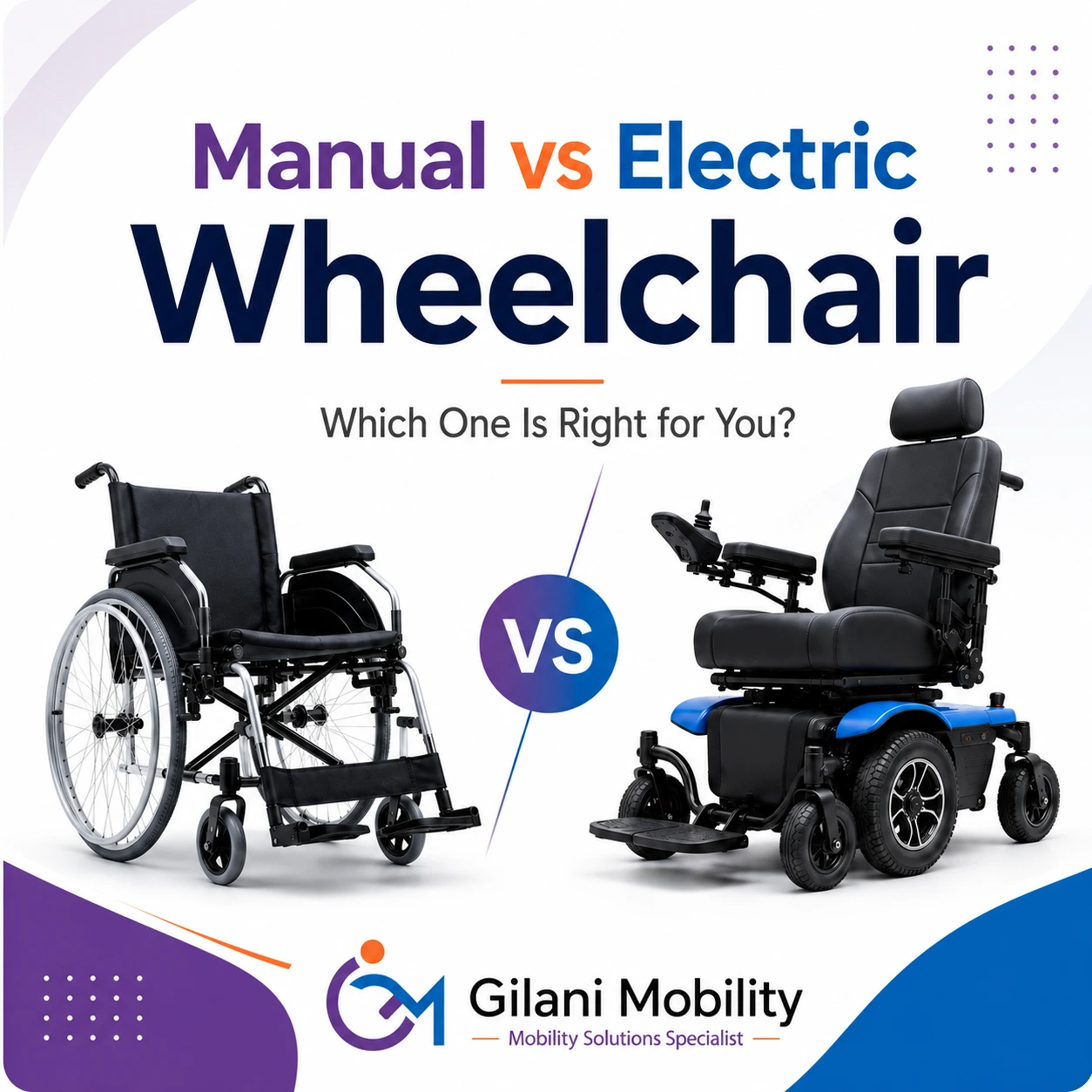
Choosing between a manual wheelchair and an electric wheelchair is not simply a matter of selecting the cheaper, lighter or more powerful option. The right wheelchair should suit the user’s physical abilities, daily routine, environment, transport arrangements, comfort requirements and level of caregiver support.
If you’re not yet sure which category is right for you, browse all wheelchair types before comparing individual models.
A manual wheelchair may be ideal for someone who can self-propel, travels frequently by car or needs a lightweight mobility solution. An electric wheelchair, also called a power wheelchair or powered wheelchair, may be more appropriate for someone who has limited upper-body strength, travels longer distances or requires powered seating and greater independent mobility.
This guide compares manual and electric wheelchairs globally, explains when purchasing or renting may make more sense, and provides a practical checklist to help users, families and caregivers make a more informed decision.
Quick Answer: Is a Manual or Electric Wheelchair Better?
Neither wheelchair type is automatically better for everyone.
A manual wheelchair may be better when portability, simple maintenance, affordability and easy car transport are the main priorities.
An electric wheelchair may be better when the user needs powered mobility, travels longer distances, has limited strength or requires specialised seating functions.
For temporary use, travel or post-surgery recovery, wheelchair rental may be more practical than purchasing immediately.
Listen to the Podcast
Prefer an audio explanation? Listen to our short podcast episode:
“Manual Wheelchair vs Electric Wheelchair: Which One Is Right for You?”
We compare physical effort, independent mobility, caregiver support,
comfort, transportation, charging, maintenance, and whether buying or
renting a wheelchair may be the better choice.
What Is a Manual Wheelchair?
A manual wheelchair moves without a motor or battery. Depending on its design, it can be:
- Self-propelled by the wheelchair user using the large rear wheels.
- Pushed by a caregiver or attendant.
- Used as both a self-propelled and attendant-assisted wheelchair.
Manual wheelchairs are available in several configurations, including lightweight wheelchairs, folding wheelchairs, transit chairs, active wheelchairs, reclining wheelchairs, bariatric wheelchairs and paediatric wheelchairs.
Their relatively simple construction usually makes them easier to lift, fold, store, transport and maintain than powered models.
What Is an Electric Wheelchair?
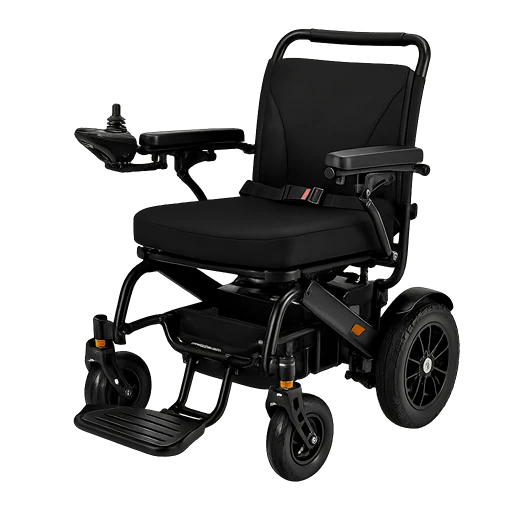
An electric wheelchair uses motors and rechargeable batteries for movement. It is normally controlled using a joystick, although alternative controls may be available for users who cannot operate a standard joystick.
Depending on the model, an electric wheelchair may include:
- Foldable or rigid frames.
- Indoor or all-terrain wheels.
- Reclining backrests.
- Tilt-in-space seating.
- Elevating leg rests.
- Standing functions.
- Attendant controls.
- Adjustable driving modes.
- Removable batteries.
Electric wheelchairs are commonly selected by users who cannot comfortably propel a manual wheelchair or who want to travel longer distances with less physical effort.
Manual Wheelchair vs Electric Wheelchair Comparison
| Factor | Manual wheelchair | Electric wheelchair |
|---|---|---|
| Movement | Self-propelled or caregiver-pushed | Battery and motor powered |
| Physical effort | Requires user or caregiver effort | Requires minimal propulsion effort |
| Portability | Usually lighter and easier to transport | Often heavier, although folding models are available |
| Charging | Not required | Regular charging is required |
| Maintenance | Generally simpler | Includes batteries, motors and electronic controls |
| Indoor use | Often suitable for narrow spaces | Depends on chair width and turning radius |
| Outdoor use | Best on suitable, relatively level surfaces | Some models are designed for longer distances and uneven terrain |
| Seating functions | Usually more limited | May include powered tilt, recline or elevation |
| Purchase cost | Usually lower | Usually higher |
| Best suited to | Short trips, travel and users with suitable strength or caregiver support | Independent powered mobility and longer daily journeys |
1. Physical Strength and Energy
The first consideration is how the wheelchair will be moved.
A self-propelled manual wheelchair requires enough arm, shoulder and hand function to push, steer and stop the chair. The amount of effort depends on the wheelchair’s weight, wheel setup, surface, slope, distance and the user’s propulsion technique.
Even when a caregiver pushes the wheelchair, the chair may become difficult to manage over ramps, uneven paths or long distances.
An electric wheelchair reduces the physical effort required for propulsion. It can therefore be useful for people who experience fatigue, reduced upper-body strength, limited endurance or difficulty pushing a manual wheelchair consistently.
However, the user must still be able to operate the wheelchair controls safely or use a suitable alternative control system.
2. Independence and Caregiver Support
A manual wheelchair can provide independent mobility when the user can self-propel effectively. However, some manual wheelchair users depend on a caregiver for hills, long distances or difficult surfaces.
An electric wheelchair may allow a user to move around independently without relying on another person to push the chair. This can be particularly valuable at home, at work, in educational settings or while participating in community activities.
The decision should consider not only whether caregiver support is currently available, but whether that support will remain consistent throughout the day.
3. Daily Distance and Frequency of Use
Consider how far and how often the wheelchair will be used.
A lightweight manual wheelchair may be practical for:
- Moving between rooms.
- Short community visits.
- Medical appointments.
- Shopping trips with a caregiver.
- Occasional or temporary use.
- Travel where the chair must frequently be lifted into a vehicle.
An electric wheelchair may be more suitable for:
- Full-day mobility.
- Longer indoor and outdoor journeys.
- Large workplaces or campuses.
- Users who cannot self-propel consistently.
- People who need to conserve energy for other activities.
- Users who spend a significant part of the day in their wheelchair.
A person who needs a wheelchair only occasionally may have very different requirements from someone who uses one throughout the day.
4. Indoor Space and Turning Radius
Before choosing a wheelchair, measure the areas where it will be used most frequently.
Important measurements include:
- Doorway width.
- Corridor width.
- Lift or elevator dimensions.
- Bathroom access.
- Space beside the bed.
- Turning space in the kitchen and living areas.
- Vehicle boot or storage dimensions.
Manual wheelchairs are often easier to manoeuvre in compact spaces because many models are narrow and lightweight.
Electric wheelchairs vary considerably. Some compact power wheelchairs have tight turning circles suitable for indoor use, while larger all-terrain or reclining models may require more space.
The overall width listed in the wheelchair specifications is more useful than looking only at the seat width.
5. Outdoor Terrain and Slopes
The surfaces around the user’s home, workplace and community should influence the decision.
A manual wheelchair may work well on smooth indoor flooring and level, paved outdoor areas. Rough surfaces, thick carpets, steep ramps, loose gravel and long inclines can make propulsion more difficult.
Electric wheelchairs may provide better performance over longer distances or challenging surfaces, depending on their motors, wheel size, suspension, ground clearance and drive configuration.
However, not every electric wheelchair is an all-terrain wheelchair. A lightweight folding power wheelchair designed for airports and shopping centres should not automatically be treated as suitable for sand, grass, steep slopes or rough outdoor paths.
Always check the manufacturer’s stated slope, surface and weather limitations.
6. Portability, Vehicles and Travel
Portability is one of the strongest advantages of a manual wheelchair.
Many manual wheelchairs can be folded, lifted and placed inside a standard car boot. Transit wheelchairs can be particularly useful when a caregiver will push the chair and compact storage is important.
Electric wheelchairs are generally heavier because they include batteries, motors and electronic components. Some foldable electric wheelchairs are designed for car and air travel, but their total weight should still be checked before purchasing.
Ask the following questions:
- Can the wheelchair be folded?
- Can the battery be removed?
- What is the weight without the battery?
- Can the caregiver safely lift it?
- Will it fit inside the intended vehicle?
- Is a wheelchair hoist, ramp or accessible vehicle required?
- What battery documentation may be needed for air travel?
Airline policies differ, particularly for powered wheelchairs and lithium batteries. Users should contact the airline before travelling and provide the exact wheelchair and battery specifications.
7. Seating, Posture and Comfort
Comfort is not determined only by whether a wheelchair is manual or electric.
The chair must fit the user correctly. Important considerations include:
- Seat width and depth.
- Backrest height.
- Armrest height.
- Footrest position.
- Cushion type.
- Head and trunk support.
- Leg positioning.
- Transfer requirements.
- Time spent sitting in the chair.
Electric wheelchairs generally offer more powered positioning options, such as tilt, recline, elevating leg rests or seat elevation. These features may help some users change position, access tables or manage daily activities.
Manual wheelchairs can also be customised with cushions, postural supports, adjustable leg rests, headrests and specialised seating systems.
The World Health Organization recommends an individual wheelchair provision process that includes assessment, fitting, user training and follow-up rather than choosing a chair based only on a product photograph or price.
8. Maintenance and Reliability
Manual wheelchairs generally have fewer components that can fail. Routine care may include:
- Checking tyres.
- Tightening loose components.
- Inspecting brakes.
- Cleaning the frame.
- Checking upholstery.
- Lubricating suitable moving parts.
- Replacing worn casters or bearings.
Electric wheelchairs require additional attention to:
- Battery charging.
- Battery condition.
- Motors.
- Joystick or control system.
- Wiring and connectors.
- Electronic brakes.
- Chargers.
- Tyres and suspension.
Before buying an electric wheelchair, ask whether batteries, chargers, controllers, tyres and other spare parts are available locally. Also confirm who will inspect or repair the wheelchair if a fault develops.
A lower initial purchase price may not represent better long-term value if parts and technical support are unavailable.
9. Purchase Cost and Long-Term Ownership
Manual wheelchairs are generally less expensive because they do not contain motors, batteries or electronic controls.
Electric wheelchairs usually have a higher purchase price. Their long-term ownership cost may also include:
- Battery replacement.
- Charger replacement.
- Electrical servicing.
- Motor or controller repairs.
- Transport equipment.
- Specialist seating adjustments.
However, price should not be considered separately from function. A wheelchair that does not suit the user’s needs may be uncomfortable, difficult to operate or rarely used, even if it was initially inexpensive.
Compare the complete package, including assessment, delivery, fitting, warranty, after-sales support, spare parts and maintenance.
Should You Buy or Rent a Wheelchair?
Buying is not always the only option. Renting can be useful when the requirement is temporary or the user is not yet sure which model is suitable.
Buying may be better when:
- The wheelchair will be used regularly for a long period.
- Personalised seating or modifications are required.
- The user needs reliable daily access to the same wheelchair.
- The correct model has already been assessed or tested.
- Long-term ownership is more economical than repeated rental.
- Warranty and after-sales support are available.
Renting may be better when:
- The wheelchair is required during short-term recovery.
- A visitor or tourist needs mobility equipment.
- The user needs a temporary replacement while another chair is repaired.
- The family wants to test a manual or electric model before purchasing.
- The wheelchair is required for an event or short journey.
- The user’s condition or mobility needs may change soon.
Before renting, confirm the rental period, delivery and collection arrangements, deposit, damage policy, charger or accessories included, weight capacity and responsibility for maintenance.
Who Should Consider a Manual Wheelchair?
A manual wheelchair may be suitable for someone who:
- Has enough strength and coordination to self-propel.
- Has a caregiver who can push the wheelchair when required.
- Uses the chair mainly for short journeys.
- Frequently transfers the chair into a car.
- Needs a lightweight or foldable wheelchair.
- Does not want to manage batteries or charging.
- Requires a lower-cost mobility option.
- Needs a temporary wheelchair during recovery or travel.
For users who will be pushed by a caregiver, a compact transit wheelchair may be more practical than a self-propelled chair with large rear wheels.
Who Should Consider an Electric Wheelchair?
An electric wheelchair may be suitable for someone who:
- Cannot comfortably self-propel a manual wheelchair.
- Wants greater independent powered mobility.
- Travels longer distances during the day.
- Experiences fatigue when using a manual chair.
- Requires powered tilt, recline or leg elevation.
- Needs indoor and outdoor mobility from one chair.
- Can operate the controls safely.
- Has suitable charging and storage facilities.
The user should test the joystick response, braking, turning radius, seating and transfer method before making a final decision.
What About an Electric and Manual Hybrid Wheelchair?
Some wheelchairs can operate in more than one mode. Depending on the design, they may include electric operation, attendant pushing and manual self-propulsion.
A hybrid wheelchair may be useful when:
- The user wants powered assistance but still needs manual backup.
- A caregiver may sometimes push the chair.
- The chair must be folded for vehicle transport.
- Different family members will assist the user.
- Battery power may not be needed for every journey.
Hybrid models can provide flexibility, but users should still compare their weight, folded size, manual handling, battery range and service requirements.
Questions to Ask Before Choosing
Use these questions during a wheelchair assessment or product demonstration:
- Who will operate the wheelchair most of the time?
- Can the user self-propel without excessive fatigue?
- How many hours per day will the chair be used?
- Will it be used indoors, outdoors or both?
- What surfaces and slopes will it encounter?
- Does it fit through the user’s doors and lifts?
- Can it be transported in the family vehicle?
- What is the total wheelchair weight?
- What user weight capacity is required?
- Are special seating or pressure-relief features needed?
- Is there a safe place to charge an electric wheelchair?
- Are replacement batteries and spare parts available?
- What warranty and after-sales support are included?
- Would renting or testing the model first be more appropriate?
Choosing a Manual or Electric Wheelchair in Dubai and the UAE
For users and families in Dubai and across the UAE, the same global selection principles apply: the wheelchair should match the user, environment, transport arrangements and expected daily use.
Gilani Mobility supplies manual wheelchairs and electric wheelchairs for purchase, including lightweight, folding, heavy-duty, bariatric and specialised models. Selected products are supported by manufacturer warranty, after-sales assistance, repair services and optional extended protection.
Customers who need a chair temporarily can also explore wheelchair rental in Dubai and the UAE, with manual and electric options and flexible daily, weekly or monthly rental periods. Rental can be useful for tourists, elderly visitors, temporary recovery, events or customers who want to experience a model before committing to a purchase.
Before choosing, speak with the Gilani Mobility team about:
- The user’s weight and measurements.
- Indoor and outdoor use.
- Required travel range.
- Folding and vehicle transport.
- Seating and positioning needs.
- Caregiver requirements.
- Rental or purchase options.
- Warranty and extended protection.
- Delivery, servicing and spare-parts support.
Final Verdict
Choose a manual wheelchair when lightweight transport, simple maintenance, short-distance use and affordability are the main priorities.
Choose an electric wheelchair when the user needs powered independent mobility, travels longer distances, has limited propulsion strength or requires advanced powered seating.
Consider renting first when the need is temporary, when travelling or when the user wants to test a wheelchair before purchasing.
Most importantly, do not select a wheelchair using price or appearance alone. A correctly selected and fitted wheelchair should support the user’s mobility, comfort, daily activities, environment and long-term requirements.
Frequently Asked Questions
Is an electric wheelchair better than a manual wheelchair?
An electric wheelchair is not automatically better. It may be more suitable for someone who cannot self-propel or needs to travel longer distances. A manual wheelchair may be more practical for short journeys, frequent vehicle transport and users who want a lighter chair.
Can an elderly person use an electric wheelchair?
Yes, provided the person can operate the controls safely and the wheelchair fits their physical, cognitive, visual and environmental requirements. A practical assessment and supervised trial are recommended before purchase.
Is a manual wheelchair suitable for long-term use?
Yes. Many people use manual wheelchairs long term. Correct sizing, seating, propulsion setup and user training are important, particularly for someone who will use the chair throughout the day.
Which wheelchair is easier to transport?
A manual wheelchair is usually easier to transport because it is generally lighter and many models fold. Foldable electric wheelchairs are available, but their full weight and battery handling requirements should be checked.
Can electric wheelchairs be pushed manually?
Many electric wheelchairs include a freewheel or manual-push mode, but the function varies by model. The user should follow the manufacturer’s instructions because disengaging the drive system may also affect braking.
Should I rent a wheelchair before buying one?
Renting can be helpful when the need is temporary or when you want to test general features. However, a rental chair may not include the exact seating configuration required for long-term use.
How long does an electric wheelchair battery last?
Battery performance varies according to battery type, capacity, wheelchair weight, user weight, terrain, slope, temperature, driving style and battery condition. Use the manufacturer’s tested range as a comparison rather than a guaranteed everyday distance.
What is the best wheelchair for travelling?
A lightweight folding manual wheelchair or a foldable electric wheelchair may be practical for travel. Check the folded dimensions, total weight, battery type, airline policy, vehicle space and the caregiver’s ability to lift the chair.
Do I need a professional wheelchair assessment?
An assessment is strongly recommended for regular or long-term wheelchair use, specialised seating needs, postural support, powered controls or complex mobility requirements. It can help determine appropriate dimensions, functions, accessories and training needs.