



























Table of Contents
ToggleThe slope of a wheelchair ramp plays a critical role in safety, comfort, and accessibility. If a ramp is too steep, it becomes difficult to use and increases the risk of accidents. If it is designed correctly, it allows wheelchair users and caregivers to move more safely and independently.
In simple terms, the slope of a wheelchair ramp refers to how much the ramp rises compared to how far it extends horizontally. A common standard is a 1:12 ratio, meaning for every 1 unit of vertical rise, the ramp should have 12 units of horizontal length.
Why Wheelchair Accessibility Matters
Wheelchair accessibility is not just about convenience. It is about providing equal access to buildings, services, and public spaces. A properly designed ramp allows people with mobility challenges to move with dignity and independence.
Accessibility also benefits a wider group of people, including seniors, individuals recovering from injuries, and parents using strollers. Good design improves usability for everyone.
What Is the Slope of a Wheelchair Ramp?
The slope of a wheelchair ramp is the incline of the ramp, usually measured as a rise-to-run ratio. For example, a 1:12 slope means that for every inch of height, the ramp must extend 12 inches in length.
This ratio directly affects usability. A gentle slope makes movement easier and safer, while a steep slope requires more effort and control.
Relationship Between Slope and Incline
The steeper the slope, the greater the incline. A ramp with a high incline can be difficult for wheelchair users to navigate, especially when moving independently or in wet conditions.
That is why proper planning is essential. The correct slope ensures a safer and more practical experience for the user.
Why Slope Matters in Ramp Design
The slope of a wheelchair ramp directly impacts accessibility and safety. A poorly designed ramp can cause strain, instability, and increased risk of accidents.
In many standards, a maximum slope of 1:12 is used as a guideline. When space allows, a gentler slope is always a better option because it improves ease of use.
Impact of Ramp Slope on Accessibility
For individuals with limited mobility, slope can determine whether a space is accessible or not. Gentle slopes require less effort and provide better control compared to steeper ones.
- Gentle slope: Easier, safer, and more comfortable
- Moderate slope: Requires more effort
- Steep slope: Difficult and potentially unsafe
A well-designed ramp should also include a slip-resistant surface, proper width, and support features such as handrails when needed.
Factors That Affect Ramp Slope
Space Constraints
Limited space often leads to steeper ramps, which can reduce usability. When space is tight, better solutions include longer layouts, landings, or switchback designs instead of increasing the slope.
Material and Surface
Ramp materials should be durable and slip-resistant. Concrete, aluminum, and treated surfaces are commonly used to ensure safety and long-term use.
Weather Conditions
Outdoor ramps must handle rain, heat, and dust. Proper drainage and surface texture are essential to prevent slipping and maintain safety.
User Needs
Different users have different needs. Manual wheelchair users, powered wheelchair users, and caregivers all interact with ramps differently. A good design considers all of them.
Features of a Well-Designed Ramp
- Gentle and safe slope
- Slip-resistant surface
- Adequate width
- Proper landings
- Handrails where required
- Good drainage for outdoor use
A ramp should not only meet minimum requirements. It should be practical and comfortable for everyday use.
Portable vs Permanent Ramps
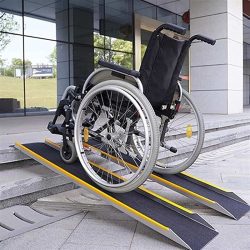
Wheelchair ramps can be portable or permanent depending on the situation. Portable ramps are useful for temporary or residential use, while permanent ramps are typically installed in public or commercial spaces.
Regardless of the type, slope remains the most important factor. A poorly designed ramp is unsafe, whether it is portable or permanent.
Conclusion
The slope of a wheelchair ramp is one of the most important aspects of accessibility design. A proper slope improves safety, usability, and independence.
In most cases, a 1:12 slope is the standard reference, but gentler slopes are always preferred when possible. Good ramp design focuses on real usability, not just minimum compliance.
Frequently Asked Questions
What is the standard slope for a wheelchair ramp?
The commonly accepted standard is 1:12, meaning 1 unit of rise for every 12 units of run.
Why is slope important?
Slope affects safety, effort, and usability. A steep ramp can be difficult and unsafe to use.
Are gentler ramps better?
Yes. Gentler ramps are easier and safer for most users.
Do portable ramps follow the same rules?
Yes. Portable ramps should also follow safe slope guidelines.
