


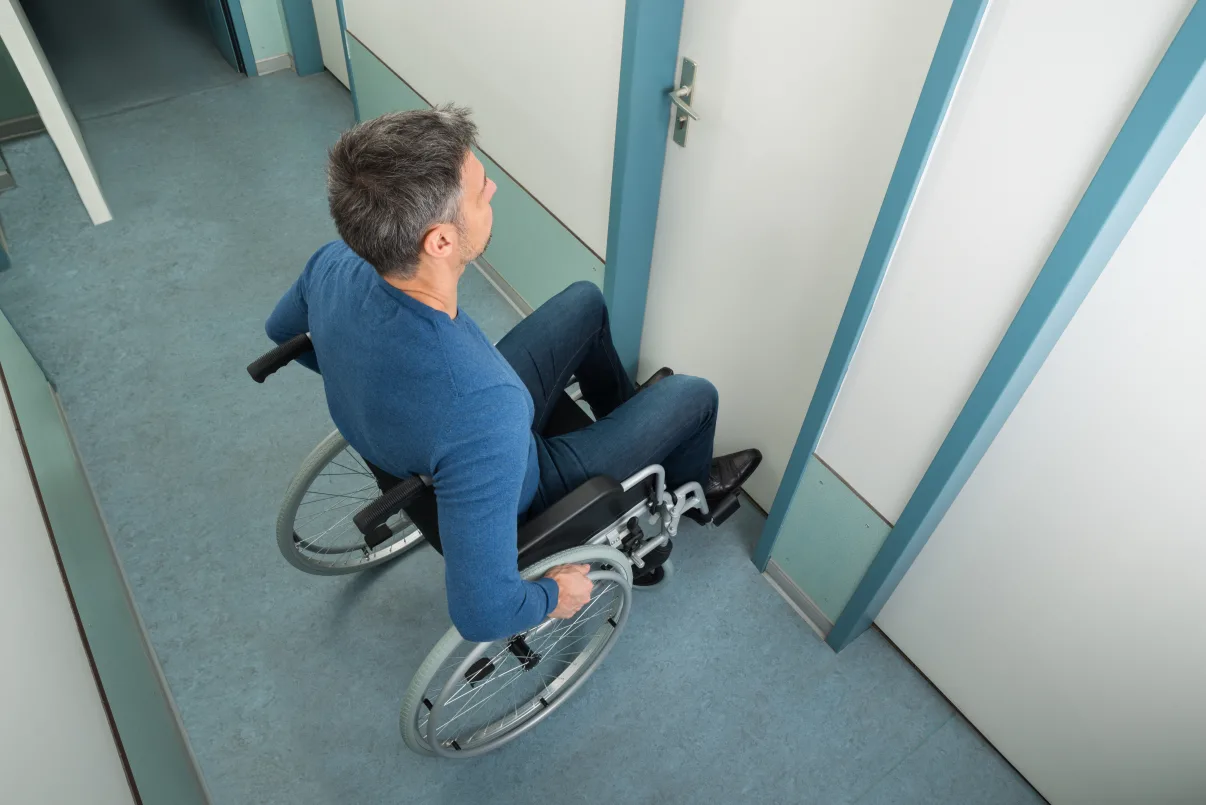
The right wheelchair door size is not simply the width written on the door specification. What matters most is the clear opening available when the door is open, together with enough space for the wheelchair user to approach, turn and pass through safely.
Wheelchair dimensions vary considerably. A compact manual chair may pass through a doorway that is too narrow for a wider powered or bariatric wheelchair, so the wheelchair and the doorway should both be measured before making accessibility modifications.
Quick Answer: How Wide Should a Door Be for a Wheelchair?
As a general international accessibility reference, the US ADA Standards require a minimum clear door opening of 32 inches (815 mm) for accessible doorways, measured with a hinged door open to 90 degrees.
However, this should not automatically be treated as the legal requirement for every property in Dubai or the UAE.
For projects in Dubai, accessibility work should be checked against the current
Dubai Universal Design Code and Dubai Building Code accessibility guidance
and the requirements applicable to the specific building.
For practical home planning, a wider clear opening can also make everyday manoeuvring easier, particularly for powered, bariatric or specialist wheelchairs.
Door Width vs Clear Opening: What Is the Difference?
One of the most common mistakes is measuring the door leaf or frame instead of the space the wheelchair can actually pass through.
The clear opening is the usable space between the open door and the opposite side of the frame or stop.
For example, a door may be described as 900 mm wide, but the actual clear passage can be smaller because of:
- The door frame
- The thickness of the door leaf
- Hinges
- Door stops
- Handles or hardware
- The angle to which the door can open
Always measure the actual clear opening rather than relying only on the nominal door size.
How to Measure a Doorway for Wheelchair Access
For a hinged door:
- Open the door to approximately 90 degrees.
- Measure the narrowest clear space between the face of the open door and the opposite door stop or frame.
- Check whether handles, stops or other hardware reduce the usable space.
- Measure the approach area on both sides of the doorway.
- Compare the clear opening with the wheelchair’s widest point.
Do not measure only the seat width. The widest point of a wheelchair may be the rear wheels, push rims, armrests or another part of the frame.
Common Wheelchair Door Width Questions
| Doorway | Practical Consideration |
|---|---|
| 30 inches / 762 mm | May be too narrow for many wheelchairs and can leave very little clearance. |
| 32 inches / 815 mm clear opening | A common international accessibility benchmark under the ADA. |
| 900 mm nominal door | May work for many wheelchairs, but the actual clear opening must be measured. |
| Wider doorway | Can provide easier access for larger powered, bariatric or specialist wheelchairs. |
These figures are useful for planning, but they should not replace the applicable local building and accessibility requirements.
Why Wheelchair Width Matters
Wheelchairs do not all have the same overall width.
Two chairs with similar seat widths can have different overall dimensions because of:
- Rear-wheel size
- Push rims
- Armrest design
- Frame construction
- Motor and battery position
- Tyres
- Seating systems
When assessing a home, measure the actual wheelchair that will be used whenever possible.
How Wheelchair Type Affects Door Clearance
The type and configuration of wheelchair can change the amount of doorway clearance required.
Manual Wheelchairs
Many
manual wheelchairs
have relatively compact frames, although overall width varies with seat size, rear wheels and push rims.
A self-propelled manual wheelchair may also require some additional side clearance so the user’s hands are not forced against the door frame while passing through.
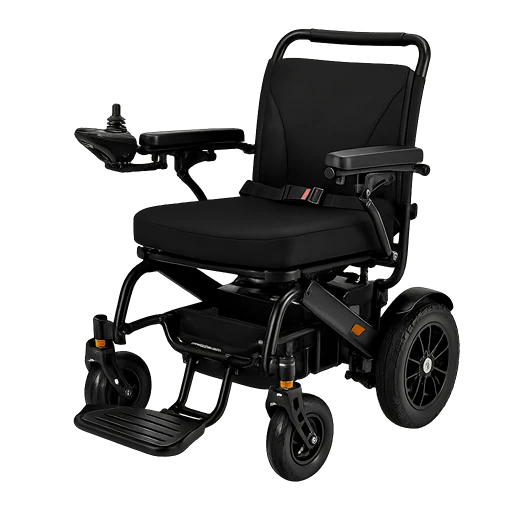
Electric Wheelchairs
Some
electric wheelchairs
can be wider or longer because of powered drive systems, seating components and larger frames.
Door width is therefore only one consideration. Turning radius and approach space can be equally important for powered mobility.
Bariatric and Specialist Wheelchairs
Bariatric wheelchairs usually have wider seating and higher weight capacities, which can increase overall wheelchair width.
Specialist seating systems can also add width beyond the basic wheelchair frame.
For these users, measuring the actual chair before modifying a doorway is particularly important.
Wheelchair Turning Space Matters as Much as Door Width
A wheelchair may technically fit through a doorway but still be difficult to use if there is not enough space to approach or turn.
Important areas to assess include:
- Hallway width
- Space immediately before the door
- Space after entering the room
- Door swing
- Furniture placement
- Nearby walls or corners
This is especially important where a wheelchair must turn immediately before or after passing through the doorway.
Can a Wheelchair Fit Through a 900 mm Door?
A 900 mm door may provide enough space for many wheelchairs, but the answer depends on the actual clear opening, not simply the nominal 900 mm dimension.
The frame and open door can reduce the usable width. Measure the clear gap with the door open and compare it with the wheelchair’s overall width.
You should also allow practical side clearance rather than designing a doorway where the wheelchair only just fits.
Can a Wheelchair Fit Through a 30-Inch Door?
A 30-inch doorway provides approximately 762 mm of width before accounting for the door and frame.
That may be too narrow for many wheelchairs and may provide insufficient clearance even when a smaller chair technically passes through.
If a frequently used doorway is this narrow, an accessibility assessment can help determine whether hinges, door hardware or structural widening could improve access.
Wheelchair Door Accessibility in Dubai
For homes, villas and buildings in Dubai, accessibility modifications should not be based solely on US or international internet guides.
Dubai Municipality provides the
Dubai Universal Design Code
and an official
Dubai Building Code Guide – Accessibility.
Dubai Municipality’s Wosool framework also assesses existing buildings against accessibility and universal-design criteria for People of Determination.
For a new construction project or structural alteration, the latest applicable Dubai requirements should therefore be checked by the relevant designer, contractor, consultant or authority before work begins.
What Else Should Be Checked Around the Door?
A doorway can be wide enough and still be difficult for a wheelchair user.
Consider:
- Threshold height
- Uneven flooring
- Door-handle type and height
- Opening force
- Automatic or powered door options
- Door swing direction
- Approach space
- Turning space
- Lighting
- Nearby ramps or level changes
Door Thresholds and Wheelchair Access
Even a wide doorway can become difficult to use if the threshold creates a significant raised edge.
Small front casters can be particularly affected by abrupt level changes.
Where possible, accessible routes should provide smooth transitions and minimise unnecessary changes in level.
Any threshold modification should also consider drainage, weather protection and the applicable building requirements.
Door Handles and Hardware
Door hardware should be easy to operate for the intended user.
Lever-style handles are often easier for people with limited hand strength than round knobs that require twisting.
The position of handles, closers and locks can also affect whether a wheelchair user can comfortably open and close the door.
What If the Doorway Is Too Narrow?
The appropriate solution depends on the building and the amount of additional clearance required.
Possible approaches can include:
- Using offset or swing-clear hinges where suitable
- Changing the door or frame configuration
- Removing unnecessary internal obstructions
- Changing the door swing where appropriate
- Installing a sliding door where suitable
- Widening the structural opening
Structural changes should be assessed and carried out by appropriately qualified professionals.
Wheelchair Access at Villa Entrances
For villas, the doorway itself should be considered together with the complete route from outside the property to the interior.
Check:
- Parking-to-entrance route
- Steps or level changes
- Ramp access where required
- Landing space outside the door
- Door threshold
- Entrance width
- Space for turning inside
Improving only the doorway may not solve the accessibility problem if the user still encounters steps, a steep approach or insufficient manoeuvring space.
How Much Extra Clearance Should You Allow?
Avoid designing around the exact wheelchair width whenever possible.
A wheelchair that only just passes through a doorway can result in:
- Hands or push rims striking the frame
- Tyres scraping the doorway
- Difficult alignment before entering
- Reduced independence
- Problems if the user later changes wheelchair
Providing practical clearance also gives more flexibility if the person later uses a different wheelchair, cushion or seating system.
Should You Measure the User or the Wheelchair?
For doorway clearance, measure the actual wheelchair at its widest point.
For selecting the wheelchair itself, user measurements such as seat width, seat depth and positioning requirements are important.
These are two separate measurements:
| Measurement | Purpose |
|---|---|
| User body and seating measurements | Helps select an appropriately sized wheelchair |
| Overall wheelchair width | Helps determine doorway and route clearance |
Professional Accessibility Assessment
If several doorways, corridors, entrances or level changes need modification, it is often better to assess the complete route rather than fixing each doorway individually.
A proper assessment can consider:
- The wheelchair currently used
- Possible future mobility requirements
- Doorway clear openings
- Turning space
- Corridor width
- Thresholds
- Ramps and level changes
- Bathroom access
- Bedroom access
- Vehicle-to-home access
For regulated construction or structural work in Dubai, compliance should be confirmed against the current applicable Dubai Municipality requirements.
Frequently Asked Questions
What size door is needed for wheelchair access?
There is no single doorway dimension that suits every wheelchair or every jurisdiction.
As an international reference, the ADA requires a minimum clear opening of 32 inches (815 mm) for accessible doorways.
For Dubai projects, check the current Dubai Building Code accessibility requirements and measure the actual wheelchair being used.
Is a 32-inch door wide enough for a wheelchair?
A 32-inch clear opening is an important international accessibility benchmark, but wheelchair widths vary.
A wider powered, bariatric or specialist chair may require more space, and approach or turning clearance must also be considered.
Can a wheelchair fit through a 900 mm door?
Often, but do not assume that a 900 mm nominal door provides 900 mm of usable clearance.
Measure the actual clear opening between the open door and the frame and compare it with the wheelchair’s overall width.
Can a wheelchair fit through a 30-inch doorway?
Some narrow wheelchairs may physically pass through, but a 30-inch doorway can be restrictive and may not provide comfortable or accessible clearance for many users.
How do I measure a wheelchair for a doorway?
Measure the wheelchair at its widest point, which may include the rear wheels, push rims, armrests or seating system.
Then measure the doorway’s actual clear opening with the door open.
Are electric wheelchairs wider than manual wheelchairs?
Not always, but some powered models have wider frames, drive systems or specialist seating.
Always compare the manufacturer’s overall-width specification rather than assuming width based only on wheelchair type.
Do bariatric wheelchairs need wider doors?
They often do because bariatric models commonly use wider seats and frames.
The actual required clearance depends on the wheelchair’s overall dimensions.
Does Dubai have accessibility requirements for wheelchair users?
Yes. Dubai Municipality provides accessibility requirements and guidance through the Dubai Building Code and Dubai Universal Design Code framework.
The current requirements applicable to the specific project should be checked before carrying out structural accessibility work.
Final Takeaway
The most important measurement for wheelchair doorway access is the clear usable opening, not simply the advertised door width.
Measure the wheelchair at its widest point, measure the actual doorway clearance and consider the approach, turning space, threshold and door hardware at the same time.
For Dubai properties, use current Dubai Municipality accessibility guidance rather than relying only on international measurements.