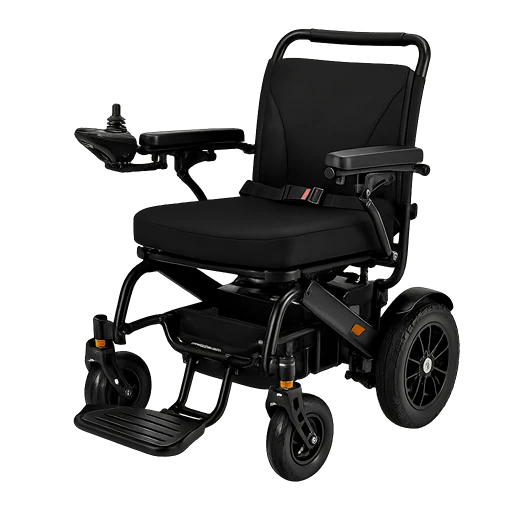




A wheelchair is a mobility device designed to help people who have difficulty walking or cannot walk independently. It provides seated mobility for everyday activities at home, outdoors, during travel and in community environments.
Wheelchairs are available in many designs, from simple manually propelled chairs to powered models with electric motors and specialist wheelchairs designed for sport, standing, travel or specific mobility requirements.
If you or someone you care for needs a wheelchair, our range of wheelchairs is available to browse online or in person at our Dubai showroom, with UAE-wide delivery included.
Quick Answer: What Is a Wheelchair?
A wheelchair is a wheeled mobility chair used by people who need support moving from one place to another. Depending on the model, it may be propelled manually by the user, pushed by a caregiver or powered by electric motors.
The right wheelchair depends on factors such as the user’s mobility, ability to self-propel, seating requirements, weight capacity, environment, transport needs and level of caregiver support.
What Is the Purpose of a Wheelchair?
The main purpose of a wheelchair is to provide safe and practical mobility for people who cannot comfortably walk the distances required for everyday life.
A wheelchair can help a user move between rooms, attend appointments, travel outside the home, participate in family or community activities and maintain greater independence in daily routines.
Different wheelchair designs are available because mobility requirements vary from person to person. Some users need a lightweight chair for occasional travel, while others require a wheelchair for everyday mobility, pressure management, powered movement or specialist positioning.
What Are the Main Types of Wheelchairs?
Wheelchairs can generally be divided into several major groups:
- Manual wheelchairs
- Electric or powered wheelchairs
- Sports wheelchairs
- Standing wheelchairs
- Specialist and purpose-built wheelchairs
| Wheelchair Type | How It Moves | Common Use |
|---|---|---|
| Manual Wheelchair | User pushes the rear wheels or a caregiver pushes the chair | Everyday mobility, travel, recovery and caregiver-assisted use |
| Electric Wheelchair | Battery-powered motors controlled using a joystick or other control system | Powered everyday mobility and longer-distance use |
| Sports Wheelchair | Manual or sport-specific propulsion | Basketball, tennis, racing and other adaptive sports |
| Standing Wheelchair | Manual or powered mobility with standing assistance | Users who require both seated mobility and supported standing |
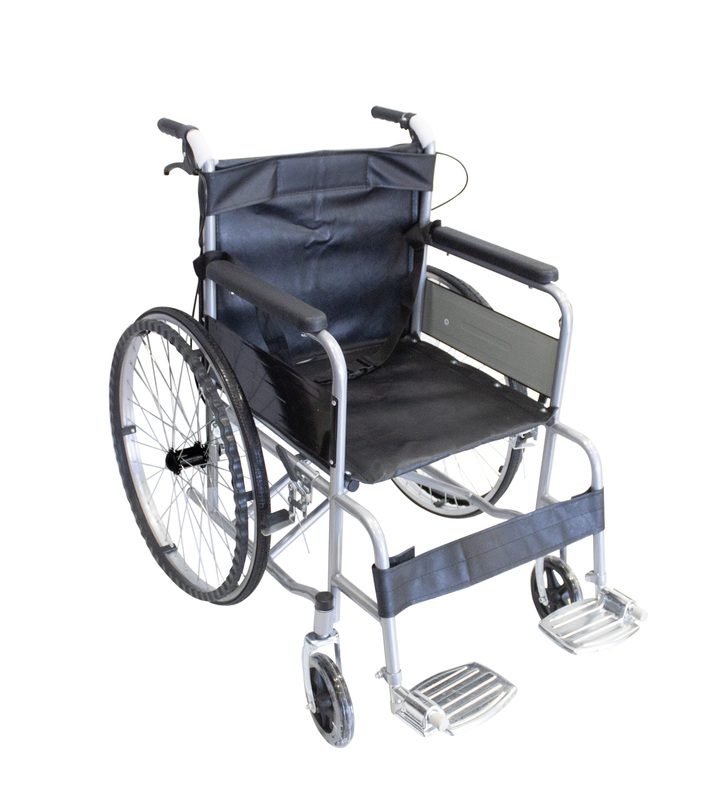
1. Manual Wheelchairs
Manual wheelchairs are moved either by the wheelchair user or by a caregiver.
Many self-propelled manual wheelchairs have two large rear wheels fitted with push rims. The user pushes these rims to move the wheelchair forward, turn or slow down. Transit and attendant-propelled models may have smaller rear wheels and are designed mainly to be pushed using handles at the back of the chair.
Manual wheelchairs are available in several configurations, including:
- Self-propelled wheelchairs
- Transit wheelchairs
- Lightweight wheelchairs
- Folding wheelchairs
- Reclining wheelchairs
- Bariatric wheelchairs
- Pediatric wheelchairs
- Active wheelchairs
- Travel and cabin wheelchairs
The appropriate model depends on how frequently the wheelchair will be used, whether the user can propel independently, the required seat width and weight capacity, and how often the chair needs to be transported.
2. Electric Wheelchairs
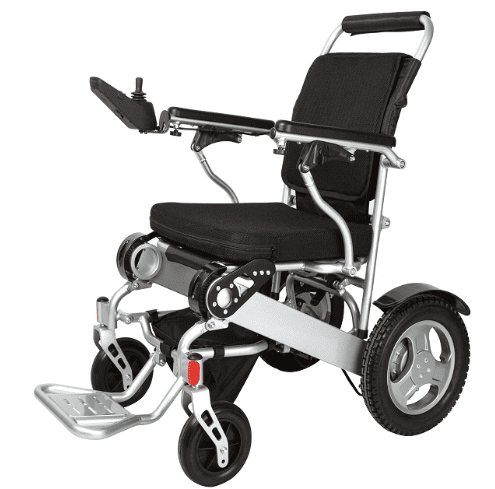
Electric wheelchairs, also known as powered wheelchairs or powerchairs, use rechargeable batteries and electric motors to provide powered mobility.
Most models are controlled using a joystick mounted near the armrest. Depending on the user’s requirements, specialist control systems may also be available, including alternative hand controls, head controls or other adaptive interfaces.
Electric wheelchairs are often considered when a user cannot comfortably self-propel a manual wheelchair or requires powered assistance for longer distances and everyday mobility.
The driving range, speed, battery size, weight capacity and portability vary considerably between models. A lightweight folding electric wheelchair may be suitable for transport and travel, while larger powered wheelchairs may offer more advanced seating, suspension or outdoor capability.
Manual Wheelchair vs Electric Wheelchair
The main difference between a manual wheelchair and an electric wheelchair is how the chair is propelled.
| Feature | Manual Wheelchair | Electric Wheelchair |
|---|---|---|
| Propulsion | User or caregiver | Electric motors |
| Power source | No battery required | Rechargeable battery |
| Typical weight | Usually lighter | Usually heavier |
| Transport | Many models fold for easier transport | Depends on model; some are foldable |
| Independent mobility | Requires sufficient upper-body ability for self-propulsion | Powered movement can reduce propulsion effort |
| Best suited to | Shorter journeys, travel, assisted mobility and active users | Users requiring powered everyday mobility |
Neither type is automatically better for everyone. The right choice depends on the user’s mobility, strength, daily environment, transport requirements and intended use.
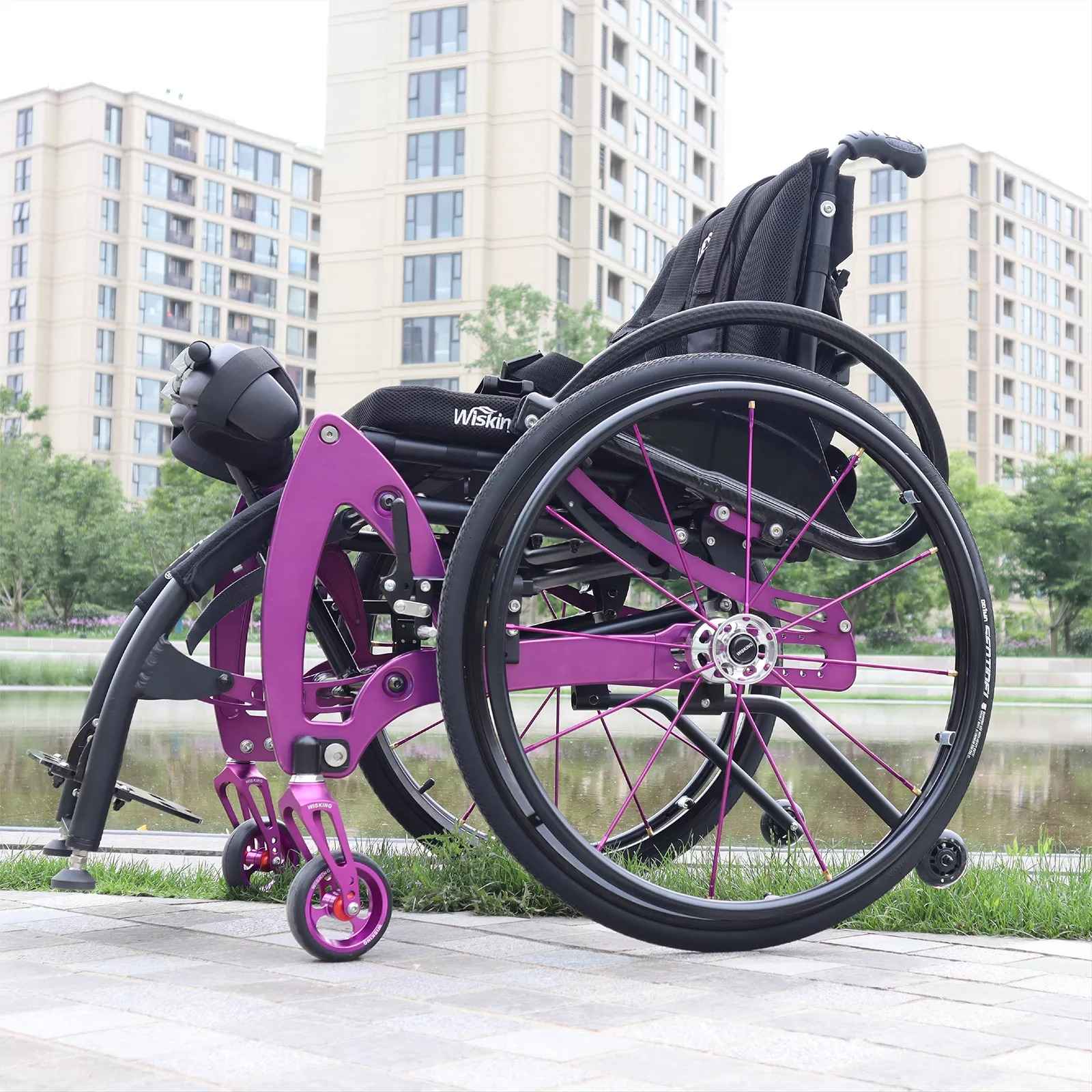
3. Sports Wheelchairs
Sports wheelchairs are purpose-built for adaptive sports and are designed differently from standard everyday wheelchairs.
Their frames, wheel angles, seating positions and materials can be optimised for a particular activity such as wheelchair basketball, tennis, racing or rugby.
For example, a wheelchair designed for basketball may prioritise quick turning and stability, while a racing wheelchair has a completely different frame and wheel configuration intended for speed.
View an example of a
professional sports wheelchair.
4. Standing Wheelchairs
Standing wheelchairs are designed to provide seated mobility while also allowing the user to move into a supported standing position.
Depending on the wheelchair, the standing mechanism may use manual, hydraulic or powered assistance.
These wheelchairs are specialist mobility devices and should be selected according to the user’s physical requirements, seating needs and professional recommendations where appropriate.
See an example of a
lightweight manual standing wheelchair.

Other Types of Wheelchairs
Wheelchair technology is not limited to the four main types above. Specialist wheelchairs are designed for particular environments, users and activities.
Other examples can include:
- All-terrain wheelchairs
- Beach wheelchairs
- Pediatric wheelchairs
- Bariatric wheelchairs
- Reclining wheelchairs
- Travel and cabin wheelchairs
- Smart wheelchairs
- Power-assist wheelchair systems
- Custom and specialist seating wheelchairs
Each type has different dimensions, seating options, weight limits, wheel configurations and intended environments, so choosing by wheelchair type is usually more useful than simply comparing appearance or price.
How Do You Choose the Right Wheelchair?
Choosing a wheelchair should start with the user’s mobility requirements rather than a particular product.
Important factors include:
- Self-propulsion: Can the user comfortably propel the wheelchair independently?
- Caregiver support: Will another person regularly push the wheelchair?
- Seat size: The seat should suit the user’s width and positioning requirements.
- Weight capacity: Every wheelchair has a specified maximum user weight.
- Indoor or outdoor use: Wheel size and frame design affect performance on different surfaces.
- Transport: Consider folded dimensions and wheelchair weight if it needs to fit in a vehicle.
- Daily distance: Longer-distance users may require a lighter manual chair, power assistance or powered mobility.
- Posture and seating: Users with more complex requirements may need specialist seating or positioning support.
Choosing a Wheelchair in Dubai and the UAE
For wheelchair users and families in Dubai and across the UAE, it is useful to consider where the wheelchair will actually be used.
A chair primarily used inside a home may have different requirements from one used for shopping centres, airports, neighbourhood travel or frequent vehicle transport.
Heat, travel frequency, available storage space, vehicle access and access to servicing can also influence which wheelchair type is most practical.
If you are comparing non-powered options, browse Gilani Mobility’s
manual wheelchair range.
For users who require powered mobility, compare the available
electric wheelchair range.
Frequently Asked Questions About Wheelchairs
What is a wheelchair used for?
A wheelchair is used to provide seated mobility for a person who cannot walk independently or cannot comfortably walk the required distance. It may be used temporarily or for long-term everyday mobility.
What are the two main types of wheelchairs?
The two main categories are manual wheelchairs and electric wheelchairs. Manual wheelchairs are propelled by the user or a caregiver, while electric wheelchairs use battery-powered motors.
What is the difference between a wheelchair and a transport chair?
A standard self-propelled wheelchair usually has large rear wheels that allow the user to propel the chair independently. A transport chair normally has smaller wheels and is primarily designed to be pushed by a caregiver.
Can wheelchairs be used outdoors?
Yes, but suitability depends on the wheelchair. Standard wheelchairs generally perform best on firm, smooth surfaces, while outdoor and all-terrain models may use larger wheels, stronger frames or specialist suspension for more demanding environments.
Do all wheelchairs fold?
No. Many manual and lightweight travel wheelchairs fold, but some rigid-frame, specialist and powered wheelchairs use different designs. Always check the folded dimensions if transport and vehicle storage are important.
Are manual and electric wheelchairs suitable for the same users?
Not necessarily. A manual wheelchair may work well for someone who can self-propel or has regular caregiver assistance, while an electric wheelchair may be more suitable when powered mobility is required. The user’s abilities, environment and daily routine should guide the decision.
How much does a wheelchair cost?
Wheelchair prices vary considerably according to the type, frame material, weight capacity, seating system, folding mechanism, powered components and specialist features. For current product pricing, compare the relevant manual or electric wheelchair category rather than relying on a general price estimate.
Where can I compare wheelchairs in Dubai?
Gilani Mobility provides manual, electric and specialist mobility equipment in the UAE. Customers can compare wheelchair types according to their mobility, seating, travel and caregiver requirements before choosing a model.
Need Help Understanding Which Wheelchair Type Is Suitable?
There is no single wheelchair that is right for every user. Start by considering whether the person needs manual or powered mobility, who will operate the chair, where it will be used and how often it needs to be transported.
You can then compare Gilani Mobility’s
manual wheelchairs
or
electric wheelchairs
according to those requirements.