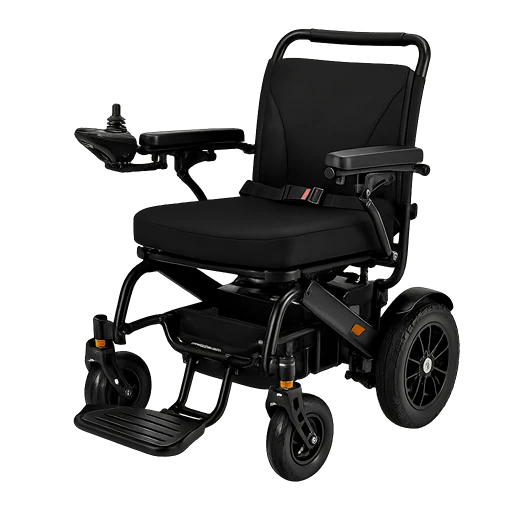


Yes, some wheelchairs can be used on grass, but how well they perform depends on the wheelchair design, wheel size, tyre type, ground conditions and the person operating the chair.
Short, firm and dry grass may be manageable for some manual and powered wheelchairs, while thick, soft, wet or uneven grass can be much more difficult. Wheelchairs specifically designed for outdoor or all-terrain use generally handle natural surfaces better than standard indoor-focused models.
Before using any wheelchair on grass, check the manufacturer’s guidance for the specific model and assess the surface rather than assuming that all grass is suitable.
Quick Answer: Can a Wheelchair Go on Grass?
A wheelchair may be able to travel over short, dry and relatively firm grass, but soft or uneven ground creates more rolling resistance than a hard pavement or indoor floor.
This can mean:
- More effort for a manual-wheelchair user or caregiver
- Greater demand on powered wheelchair motors and batteries
- Reduced traction on wet or loose surfaces
- More vibration on uneven ground
- A greater chance of small front casters sinking into soft soil
For regular outdoor use on grass, gravel or uneven paths, a wheelchair designed specifically for those conditions may be more suitable.
How Different Wheelchairs Perform on Grass
| Surface | Standard Manual Wheelchair | Standard Electric Wheelchair | All-Terrain Wheelchair |
|---|---|---|---|
| Short, dry, firm grass | Often possible, but requires more effort | Model dependent | Generally better suited |
| Thick grass | Difficult | Can be difficult for some models | Better suited when approved for the terrain |
| Soft or recently watered grass | Higher risk of wheels sinking | Traction and resistance may be an issue | Model and tyre dependent |
| Wet grass | Reduced traction | Use only within manufacturer guidance | Still requires caution |
| Compact gravel path | Possible but harder to propel | Model dependent | Usually more appropriate |
| Loose sand | Usually very difficult | Most standard models unsuitable | Specialist equipment may be required |
These are general comparisons. The capability of an individual wheelchair should always be confirmed from its specifications and manufacturer guidance.
Why Is Grass Harder for a Wheelchair?
Hard indoor flooring and smooth pavements create relatively low rolling resistance. Grass behaves differently because the wheels can sink into the surface, push through vegetation and encounter uneven soil underneath.
The difficulty increases when the grass is:
- Long or thick
- Wet
- Soft underneath
- Recently irrigated
- On a slope
- Uneven or filled with hidden holes
Small front casters can be especially affected because they concentrate the wheelchair’s weight over a smaller contact area.
Can a Manual Wheelchair Go on Grass?
Yes, a
manual wheelchair
may be able to travel across short, dry and firm grass, but it generally requires more effort than travelling on a smooth surface.
For a self-propelled user, the extra rolling resistance means more force may be required through the push rims. For an attendant-propelled wheelchair, the caregiver may need to push considerably harder.
Performance can depend on:
- Rear-wheel diameter
- Front-caster size
- Tyre pressure and tread
- Wheelchair weight
- User weight
- Grass thickness
- Ground firmness
- Slope
A lightweight chair may be easier to handle overall, but small travel casters can still struggle on soft grass. Wheelchair weight alone therefore does not determine outdoor performance.
Can an Electric Wheelchair Go on Grass?
Some
electric wheelchair models
can travel over firm grass, but capability varies significantly between products.
A compact powered wheelchair designed mainly for indoor use may have smaller wheels, lower ground clearance or a drive system that is less suitable for soft terrain.
For grass use, check:
- Wheel and tyre size
- Drive-wheel position
- Ground clearance
- Manufacturer-approved terrain
- Maximum recommended slope
- Suspension
- Weather or moisture protection
- Battery condition
Do not assume that a wheelchair is suitable for grass simply because it has powerful motors.
Traction, stability and the surface underneath the grass are equally important.
What Is an All-Terrain Wheelchair?
An all-terrain wheelchair is designed to handle a wider range of outdoor surfaces than a standard mobility chair.
Depending on the model, features may include:
- Larger wheels
- Wider tyres or deeper tread
- Higher ground clearance
- Suspension
- Stronger outdoor-oriented frames
- Powered drive systems
- Stability or anti-tip features
However, the term “all-terrain” does not mean that a wheelchair can safely travel anywhere. Every model has limits relating to slopes, obstacles, water exposure, surface type and user weight.
Example of an Outdoor-Oriented Wheelchair
One example in the Gilani Mobility range is the
Smart Wheels All-Terrain Electric Wheelchair/Scooter.
The current product specification includes larger front wheels, suspension and an outdoor-oriented drive design. Gilani Mobility’s product information specifically lists grass among the surfaces the model is intended to handle. :contentReference[oaicite:3]{index=3}
That does not mean every grassy surface is automatically suitable. Users should still consider slope, ground firmness, moisture, obstacles and the manufacturer’s operating limits before use.
Dry Grass vs Wet Grass
Short, Dry Grass
Short grass over firm soil is usually the easiest grass condition for a wheelchair because the wheels are less likely to sink deeply into the ground.
Even then, rolling resistance will generally be higher than on a hard path.
Thick or Long Grass
Long grass can wrap around small wheels, create additional resistance and hide uneven ground underneath.
A standard wheelchair may therefore become much harder to push or drive.
Wet Grass
Wet grass creates different challenges. Traction may be reduced, while the soil underneath may become softer and more likely to allow wheels to sink.
Powered-wheelchair users must also follow the manufacturer’s instructions regarding water and moisture exposure.
If the ground is saturated or muddy, avoiding the surface may be the safer option even when the wheelchair is designed for outdoor use.
Can a Wheelchair Go on Gravel?
Compact, firm gravel can sometimes be crossed by wheelchairs with suitable wheel sizes, but loose gravel is much more difficult.
Small front casters can sink or become difficult to steer, while loose stones increase rolling resistance.
Larger outdoor wheels and suitable tyres usually improve performance, but always check the wheelchair’s intended terrain.
Can a Wheelchair Go on Sand?
Standard manual and electric wheelchairs are generally not designed for loose beach sand.
Sand creates very high rolling resistance and can cause narrow wheels to sink quickly.
Specialist beach wheelchairs commonly use very wide, low-pressure wheels to distribute weight differently across the surface.
Do not treat an ordinary all-terrain wheelchair as a beach wheelchair unless the manufacturer specifically states that the model is suitable for that surface.
What Wheel Features Help on Grass?
Larger Front Casters
Larger front wheels can roll over small bumps and uneven ground more easily than very small casters.
Wider Tyres
Wider tyres can distribute weight over a larger contact area and may improve traction on softer ground.
Suitable Tread
Tyre tread can improve grip, but aggressive tread alone does not make a wheelchair suitable for every outdoor surface.
Suspension
Suspension can help reduce the vibration transferred to the user when travelling over uneven ground.
Ground Clearance
Higher ground clearance can reduce the chance of the wheelchair frame or components contacting uneven terrain.
Does Wheelchair Weight Matter on Grass?
Yes, but not in a simple “lighter is always better” way.
A lighter manual wheelchair may require less effort to push, but wheel size and ground conditions remain important.
A heavier powered wheelchair may have stronger motors and outdoor tyres, but its additional weight may cause it to sink further into soft ground.
The complete wheelchair design should therefore be considered rather than weight alone.
Does Grass Reduce Electric Wheelchair Battery Range?
Soft or uneven terrain can require more energy than a smooth indoor floor or pavement.
For a powered wheelchair, increased rolling resistance may reduce real-world driving range compared with ideal test conditions.
Actual range can also vary according to:
- User weight
- Battery condition
- Terrain
- Slopes
- Speed
- Tyre condition
- Temperature
- Driving style
For outdoor trips, start with sufficient battery charge and avoid planning a journey based only on the maximum advertised range.
Using a Wheelchair on Grass in the UAE
Outdoor wheelchair use in Dubai and across the UAE can involve parks, landscaped areas, villa gardens, outdoor events, resort grounds and routes between paved walkways.
Grass conditions can change depending on irrigation and maintenance.
A lawn that feels firm when dry may become considerably softer shortly after watering.
Before crossing a grassy area, check:
- Whether the surface is firm or soft
- Whether the grass has recently been watered
- Whether there are hidden holes or kerbs
- Whether there is a slope
- Whether a paved accessible route is available nearby
- Whether the wheelchair is designed for that terrain
For longer UAE outdoor journeys, heat and battery condition should also be considered according to the wheelchair manufacturer’s operating and storage instructions.
Should You Use a Wheelchair on a Grass Slope?
Grass combined with a slope requires more caution because both traction and stability can change.
Avoid assuming that a wheelchair capable of driving on flat grass is automatically suitable for a grassy incline.
Check the manufacturer’s stated slope limits and consider whether the surface is dry, firm and free of obstacles.
What Should You Check Before Going Across Grass?
| Check | Why It Matters |
|---|---|
| Grass condition | Wet, thick or soft grass creates more resistance and less traction. |
| Ground underneath | Soft soil can cause wheels to sink even when the grass looks short. |
| Wheel size | Small casters can struggle more on uneven or soft surfaces. |
| Tyres | Tyre width and tread affect traction and weight distribution. |
| Slope | Inclines change propulsion effort, traction and stability. |
| Battery | Powered wheelchairs may consume more energy on resistant terrain. |
| Manufacturer guidance | Confirms whether the wheelchair is intended for the planned surface. |
After Using a Wheelchair Outdoors
Outdoor use can expose a wheelchair to grass, dust, sand, moisture and other debris.
After use:
- Check the wheels and casters for trapped grass or debris.
- Inspect tyres for visible damage.
- Keep electrical connections clean and dry according to manufacturer instructions.
- Check that brakes and moving components continue to operate normally.
- Follow the maintenance schedule for the specific wheelchair.
Do not pressure-wash or soak powered components unless the manufacturer specifically allows it.
Real Outdoor Mobility Experiences
Specifications can explain what a wheelchair is designed to do, but real mobility experiences can also show the practical questions that arise when people use mobility equipment outside the home.
The
Gilani Mobility Community
shares customer stories, videos and accessibility experiences from wheelchair users, People of Determination, seniors, families and caregivers across the UAE.
These experiences can help users and families think about practical factors such as outdoor access, transport, independence, caregiver support and everyday mobility. They should be treated as individual experiences rather than proof that a particular wheelchair will work for everyone or every surface.
Frequently Asked Questions
Can a normal wheelchair go on grass?
A standard wheelchair may be able to cross short, dry and firm grass, but it will usually require more effort than travelling on a hard surface. Thick, soft or wet grass can be much more difficult.
Can a manual wheelchair be pushed across grass?
Yes, depending on the grass and wheelchair. Large rear wheels can help, but small front casters may sink into soft ground. A caregiver may also need to use considerably more force than on a smooth path.
Can an electric wheelchair drive on grass?
Some electric wheelchairs can travel over firm grass, while others are intended mainly for smooth surfaces. Check the model’s wheel size, ground clearance, terrain guidance, slope limits and weather protection before use.
What type of wheelchair is best for grass?
A wheelchair specifically designed for outdoor or all-terrain use is generally more suitable for regular grass use than a standard indoor-focused chair. The correct choice still depends on the exact terrain, user requirements and manufacturer specifications.
Are larger wheels better for grass?
Larger and appropriately designed wheels can generally manage uneven or soft surfaces better than very small casters, but wheel size is only one part of the wheelchair’s overall outdoor capability.
Can wheelchairs go on wet grass?
Wet grass can reduce traction and the soil underneath may become soft enough for wheels to sink. Powered-wheelchair users should also follow the manufacturer’s guidance regarding moisture exposure.
Can wheelchairs go on gravel?
Firm compact gravel may be manageable for some wheelchairs, while deep or loose gravel can be difficult. Outdoor-oriented wheelchairs with larger wheels are generally better suited to uneven surfaces.
Can wheelchairs go on sand?
Standard wheelchairs generally struggle on loose sand because narrow wheels sink into the surface. Specialist beach wheelchairs use different wheel designs intended specifically for sand.
Does travelling on grass use more electric wheelchair battery?
It can. Grass and soft ground create more rolling resistance, which may require additional motor power and reduce real-world range compared with smooth surfaces.
Should I use an all-terrain wheelchair everywhere outdoors?
No. “All-terrain” does not mean unrestricted use. Every wheelchair has limits for slopes, obstacles, water exposure, surface conditions and user weight. Follow the specifications for the individual model.
Final Takeaway
So, can wheelchairs go on grass? Yes, in many cases, but the answer depends on both the wheelchair and the ground.
Short, firm and dry grass may be manageable for some standard wheelchairs. Thick, wet, soft or uneven grass can require much more effort and may be unsuitable for some manual or powered models.
For regular outdoor use, compare the wheelchair’s wheels, tyres, ground clearance, suspension, terrain guidance and user requirements instead of relying only on the label “all-terrain.”
When possible, use a firm accessible route and confirm the wheelchair manufacturer’s recommendations before travelling over unfamiliar outdoor surfaces.