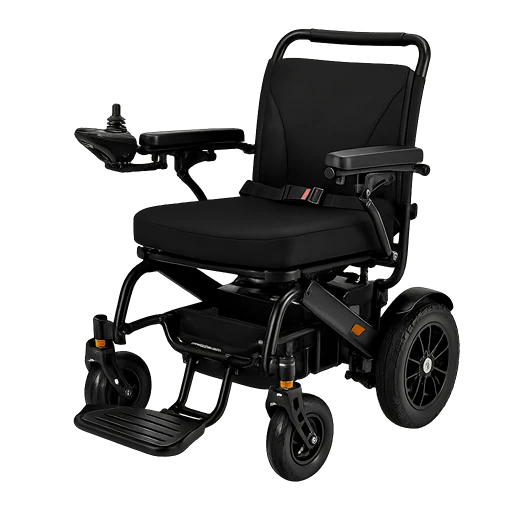




Choosing between a lightweight wheelchair and a regular wheelchair can affect everyday handling, transport, comfort and how much effort is required from the user or caregiver.
The main difference is that lightweight wheelchairs are designed to reduce overall chair weight and improve portability, while regular or standard wheelchairs generally prioritise straightforward construction, stability and everyday assisted mobility.
Neither type is automatically better. The right choice depends on who will use the wheelchair, how often it will be transported, whether the user will self-propel, the required seat size and weight capacity, and where the wheelchair will normally be used.
Compare lightweight, standard, powered, bariatric and other models in our wheelchair range for Dubai and the UAE.
Quick Answer: Lightweight Wheelchair vs Regular Wheelchair
A lightweight wheelchair is usually easier to lift, transport and manoeuvre because its frame and components are designed to reduce weight.
A regular wheelchair, often called a standard manual wheelchair, is generally a simpler everyday mobility chair and may be more suitable when portability is less important.
For frequent car travel, independent propulsion or regular everyday use, a lighter wheelchair can be easier to manage. For occasional use, recovery or caregiver-assisted mobility, a standard wheelchair may provide everything the user needs.
Lightweight vs Regular Wheelchair at a Glance
| Feature | Lightweight Wheelchair | Regular / Standard Wheelchair |
|---|---|---|
| Overall weight | Designed to reduce total chair weight | Usually heavier depending on frame and components |
| Transport | Generally easier to lift and load into a vehicle | May require more effort to lift |
| Folding | Many models fold for travel and storage | Many standard models also fold |
| Self-propulsion | Lower weight may reduce propulsion effort | May require more effort depending on configuration |
| Caregiver handling | Often easier to push, lift and transport | Suitable for assisted use but may be heavier |
| Adjustability | Varies; some models offer more configuration options | Usually simpler depending on model |
| Best suited to | Frequent use, travel and portability-focused users | Occasional, assisted or straightforward everyday mobility |
| Price | Can cost more depending on materials and features | Often available in simpler configurations |
These are general differences rather than fixed rules. Individual wheelchair specifications should always be checked before choosing a model.
What Is a Lightweight Wheelchair?
A lightweight wheelchair is a manual mobility chair designed to reduce the amount of weight the user or caregiver needs to move, push, lift or transport.
Manufacturers may use aluminium, carbon fibre, titanium or other lightweight materials depending on the wheelchair design and price range.
Lightweight models are particularly useful when the wheelchair needs to be:
- Loaded into and out of a car regularly
- Folded for travel or storage
- Propelled independently by the user
- Pushed regularly by a caregiver
- Used across several locations during the day
However, the word “lightweight” alone does not tell you whether a wheelchair is suitable. Seat dimensions, user weight capacity, wheel configuration, folded size and intended use are equally important.
What Is a Regular or Standard Wheelchair?
A regular wheelchair, commonly described as a standard manual wheelchair, is designed to provide straightforward seated mobility without necessarily prioritising minimum weight.
Standard models are commonly used for:
- Caregiver-assisted mobility
- Short-term recovery
- Occasional wheelchair use
- Home and indoor mobility
- Clinics, hospitals and care environments
Some standard wheelchairs use steel frames, while others use aluminium or different materials. The exact construction varies by manufacturer and model.
If you are comparing different non-powered wheelchair configurations, view Gilani Mobility’s
manual wheelchairs in Dubai and the UAE,
including lightweight, folding, self-propelled, transit and specialist options.
What Are the Main Differences?
1. Weight and Portability
Weight is usually the most obvious difference.
A lighter wheelchair can be easier for a caregiver or family member to lift into a car, move upstairs where appropriate, or handle during travel.
It can also be useful for users who frequently move between home, appointments, shopping centres and other locations.
However, do not look only at the advertised wheelchair weight.
Also check:
- Total weight with batteries or accessories where applicable
- Whether footrests can be removed
- Whether rear wheels are removable
- Folded dimensions
- Whether the person handling the chair can safely lift it
2. Ease of Self-Propulsion
For a person who propels a manual wheelchair independently, reducing unnecessary wheelchair weight can make movement easier.
But weight is not the only factor affecting propulsion effort.
Wheel size, tyre pressure, wheel alignment, seating position, surface condition and the user’s strength can all influence how easily a wheelchair moves.
This is why the lightest wheelchair is not automatically the easiest wheelchair for every user.
3. Caregiver Handling
For caregiver-assisted mobility, wheelchair weight becomes particularly important when the chair must frequently be pushed, folded or loaded into a vehicle.
A lightweight design can reduce handling effort, but caregivers should also check:
- Push-handle height
- Attendant brakes
- Wheelchair stability
- Footrest operation
- Folding mechanism
- Total lifting weight
4. Frame Material and Durability
Standard and lightweight wheelchairs can use different frame materials depending on their design.
Steel can provide a strong and straightforward frame but may increase weight. Aluminium is widely used where manufacturers want to balance strength and portability. More specialised lightweight chairs may use materials such as titanium or carbon fibre.
Durability should therefore be judged from the complete wheelchair design and manufacturer specifications rather than assuming a heavier chair is always stronger.
5. Folding and Vehicle Transport
For many wheelchair users and families in the UAE, vehicle transport is an important consideration.
Before choosing a wheelchair, measure the available boot or storage area in the vehicle and compare it with the wheelchair’s folded width, height and length.
Two wheelchairs described as lightweight can have very different folded dimensions.
A slightly heavier chair that fits easily into the intended vehicle may be more practical than a lighter chair that is difficult to store.
6. Seat Width and User Fit
Portability should never come at the expense of correct seating.
Check the user’s:
- Required seat width
- Seat depth
- Backrest height
- Footrest position
- User weight
- Postural or positioning requirements
A wheelchair that is too narrow can be uncomfortable, while a chair that is unnecessarily wide may affect posture, manoeuvrability and self-propulsion.
7. Comfort
A lightweight frame does not automatically mean better comfort.
Comfort depends on the complete seating system, including the seat upholstery, cushion, backrest, armrests, footrests and how well the wheelchair fits the user.
People using a wheelchair for longer periods may have different seating requirements from someone using it only for short trips or temporary recovery.
8. Indoor Manoeuvrability
Wheelchair dimensions can make a noticeable difference inside homes, corridors, lifts and other confined spaces.
Check the overall width and turning space rather than assuming a lightweight wheelchair will always be smaller.
A lightweight model can still be wide if it has a larger seating configuration.
9. Outdoor Use
Both lightweight and standard manual wheelchairs can be used outdoors when the model is designed for the intended surface.
For regular outdoor use, consider:
- Rear-wheel size
- Front-caster size
- Tyre type
- Ground clearance
- Frame stability
- Braking system
Small travel wheels may be convenient indoors but less comfortable on uneven outdoor surfaces.
Which Is Better for Travel?
For frequent travel, a lightweight folding wheelchair is often easier to manage because it can reduce lifting effort and storage requirements.
However, before choosing one specifically for travel, check:
- Actual wheelchair weight
- Folded dimensions
- Whether removable parts reduce transport weight
- Whether it fits the intended vehicle
- Whether the seating remains suitable for the user
For air travel, airport and airline handling requirements should also be checked before the journey.
Which Is Better for Everyday Use?
For everyday use, the answer depends more on the individual than on the label “lightweight” or “standard.”
A person who independently self-propels and frequently travels may value a lighter, more configurable chair.
A user who mainly requires caregiver-assisted mobility for shorter periods may find a simpler standard wheelchair entirely suitable.
The best approach is to consider the wheelchair as a complete mobility system rather than choosing solely based on its frame weight.
Which Is Better for an Elderly Parent?
When choosing a wheelchair for an older family member, consider who will operate the chair and how it will be used.
A lightweight wheelchair may be helpful when a family member frequently loads the chair into a vehicle or pushes it during appointments and outings.
A standard wheelchair may be suitable when it will mostly remain in one location and portability is less important.
Also consider ease of transfers, seat comfort, footrest operation, brakes and the amount of assistance the user requires.
Lightweight Wheelchair vs Regular Wheelchair for UAE Use
In the UAE, practical everyday use can include moving between air-conditioned indoor spaces, travelling by car, visiting hospitals or clinics, shopping centres, hotels, airports and community locations.
For users who travel regularly by car, folded dimensions and lifting weight may be especially important.
For a wheelchair mainly used inside a home or care environment, seat fit, overall width and ease of manoeuvring through doors may matter more.
There is therefore no single wheelchair specification that works best for every UAE user.
The decision should reflect the person’s daily routine and the environments in which the chair will actually be used.
How to Choose Between a Lightweight and Standard Wheelchair
Ask these questions before deciding:
| Question | Why It Matters |
|---|---|
| Will the user self-propel? | A lighter and appropriately configured chair may reduce propulsion effort. |
| Will a caregiver push the wheelchair? | Chair weight, brakes and push-handle design become important. |
| Will it be transported regularly? | Check weight, folding mechanism and folded dimensions. |
| How many hours will it be used? | Longer use may require greater attention to seating and positioning. |
| Where will it be used? | Indoor and outdoor environments may require different wheels and dimensions. |
| What seat width is required? | Correct fit affects comfort, posture and manoeuvrability. |
| What is the user’s weight? | The selected model must provide an appropriate stated weight capacity. |
| What is the budget? | Compare the features actually required rather than paying only for lower weight. |
When Might a Lightweight Wheelchair Be the Better Choice?
A lightweight wheelchair may be worth considering when:
- The wheelchair is transported frequently
- A caregiver regularly lifts the wheelchair
- The user self-propels regularly
- Storage space is limited
- The wheelchair is used across multiple locations
- Travel is an important part of the user’s routine
When Might a Standard Wheelchair Be Enough?
A standard wheelchair may be suitable when:
- Use is occasional or temporary
- The wheelchair remains mainly in one location
- A caregiver provides most of the propulsion
- Portability is not a major requirement
- A straightforward mobility solution meets the user’s needs
What If Manual Propulsion Is Difficult?
If the user cannot comfortably self-propel or requires powered mobility for longer distances, the decision may not simply be between a lightweight and standard manual wheelchair.
In that situation, it may be useful to compare power-assist options or
electric wheelchairs
based on the user’s mobility requirements.
This is a different mobility category, so powered options should be evaluated separately rather than choosing an electric model only because a manual wheelchair feels difficult to push.
Frequently Asked Questions
What is the main difference between a lightweight and regular wheelchair?
The main difference is usually overall wheelchair weight and portability.
Lightweight wheelchairs are designed to reduce weight for easier propulsion, lifting and transport, while regular wheelchairs tend to use simpler designs where minimum weight is not the main priority.
Is a lightweight wheelchair easier to push?
It can be, because reducing wheelchair weight may reduce some of the effort required to propel or push it.
However, tyres, wheel alignment, seating position, surface conditions and wheelchair fit also affect how easily a chair moves.
Are lightweight wheelchairs easier to transport?
Generally yes, especially when the model also folds compactly.
Always check the actual wheelchair weight and folded dimensions because these vary between products.
Are regular wheelchairs stronger than lightweight wheelchairs?
Not necessarily.
Strength and user weight capacity depend on the complete frame design, materials and manufacturer specifications.
A modern lightweight wheelchair can still provide a high stated weight capacity.
Do all lightweight wheelchairs fold?
No. Many lightweight travel and everyday models fold, while some active or rigid-frame wheelchairs use non-folding designs.
Check the individual model specifications if vehicle storage is important.
Is a lightweight wheelchair better for elderly users?
It can be useful when caregivers need to push, fold or transport the wheelchair frequently.
However, seating comfort, transfers, brakes, footrests and user fit are equally important.
How do I know what wheelchair size I need?
Start with appropriate seat width and depth together with the user’s weight, positioning requirements and intended use.
Overall wheelchair dimensions should also be checked if the chair needs to pass through narrow doors or fit into a vehicle.
Should I choose a lightweight wheelchair just because it weighs less?
No.
Lower weight is useful only when the wheelchair also provides the correct fit, weight capacity, comfort, stability and features for the user.
Final Takeaway
The choice between a lightweight wheelchair and a regular wheelchair comes down to how the chair will actually be used.
A lightweight model can make frequent lifting, transport and self-propulsion easier, while a standard wheelchair may be perfectly suitable for occasional or caregiver-assisted mobility.
Before choosing, compare the user’s seat requirements, weight capacity, transport needs, daily environment and ability to self-propel.
Those factors are more important than choosing a wheelchair based only on whether it is labelled lightweight or standard.
To compare lightweight, folding, transit, self-propelled and other non-powered options, explore Gilani Mobility’s
manual wheelchair range.