
For most people, parking is a small part of the journey. You find a space, open the door, and walk away.
But for wheelchair users, wheelchair passengers, families, and caregivers, parking can decide whether the journey is possible at all. A car parked too close can block the ramp. A narrow bay can make it difficult to open the door fully. A rear-entry ramp may need space behind the vehicle. A side-entry ramp may depend completely on the access aisle staying clear.
This problem is not limited to one country. Families searching for wheelchair accessible vehicles in the UAE, USA, UK, Australia, New Zealand, and other parts of the world often face the same question:
Will there be enough space to get in and out safely?
That is why parking access matters just as much as the vehicle itself.
Accessible Parking Is Not Always Truly Accessible
Accessible parking spaces are designed to give wheelchair users more room than standard parking bays. That extra space is not a luxury. It is needed for wheelchair ramps, lifts, side transfers, wheelchair turning space, and caregiver support.
But in real life, accessible parking does not always work the way it should. Wheelchair users may still face:
- Accessible bays that are too narrow
- Cars parked too close to the wheelchair vehicle
- Access aisles blocked by other drivers
- Rear ramps blocked by walls, kerbs, or other vehicles
- Drivers using disabled parking spaces without needing them
- Limited space at hospitals, schools, malls, offices, hotels, airports, and public car parks
When this happens, the parking space may look available, but it becomes unusable for the person who actually needs it.
The Painted Lines Are Not Empty Space
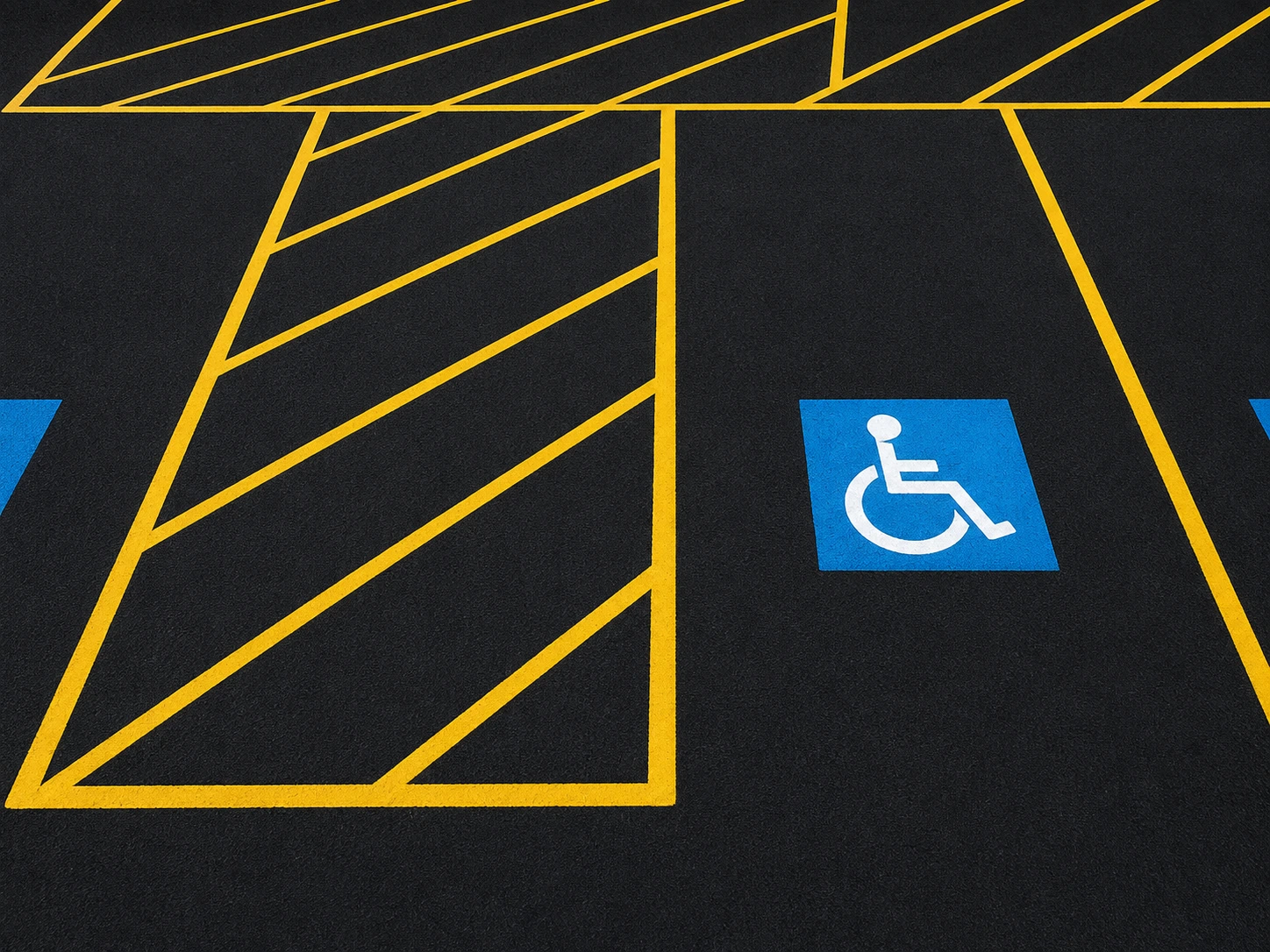
The marked space beside or behind an accessible parking bay is often treated like extra space. Some drivers stop there for a few minutes, park over the lines, or open their doors into that area.
For wheelchair users, that space may be the only safe way in or out of the vehicle.
A wheelchair ramp needs room to open. A wheelchair lift needs room to lower. A wheelchair user needs room to turn safely. A caregiver may also need space to support the person during entry and exit.
When the access aisle is blocked, a wheelchair user can be left stuck outside the vehicle, stuck inside the vehicle, or forced into an unsafe transfer.
Why Ramp-Based Wheelchair Vehicles Can Be Difficult in Tight Parking
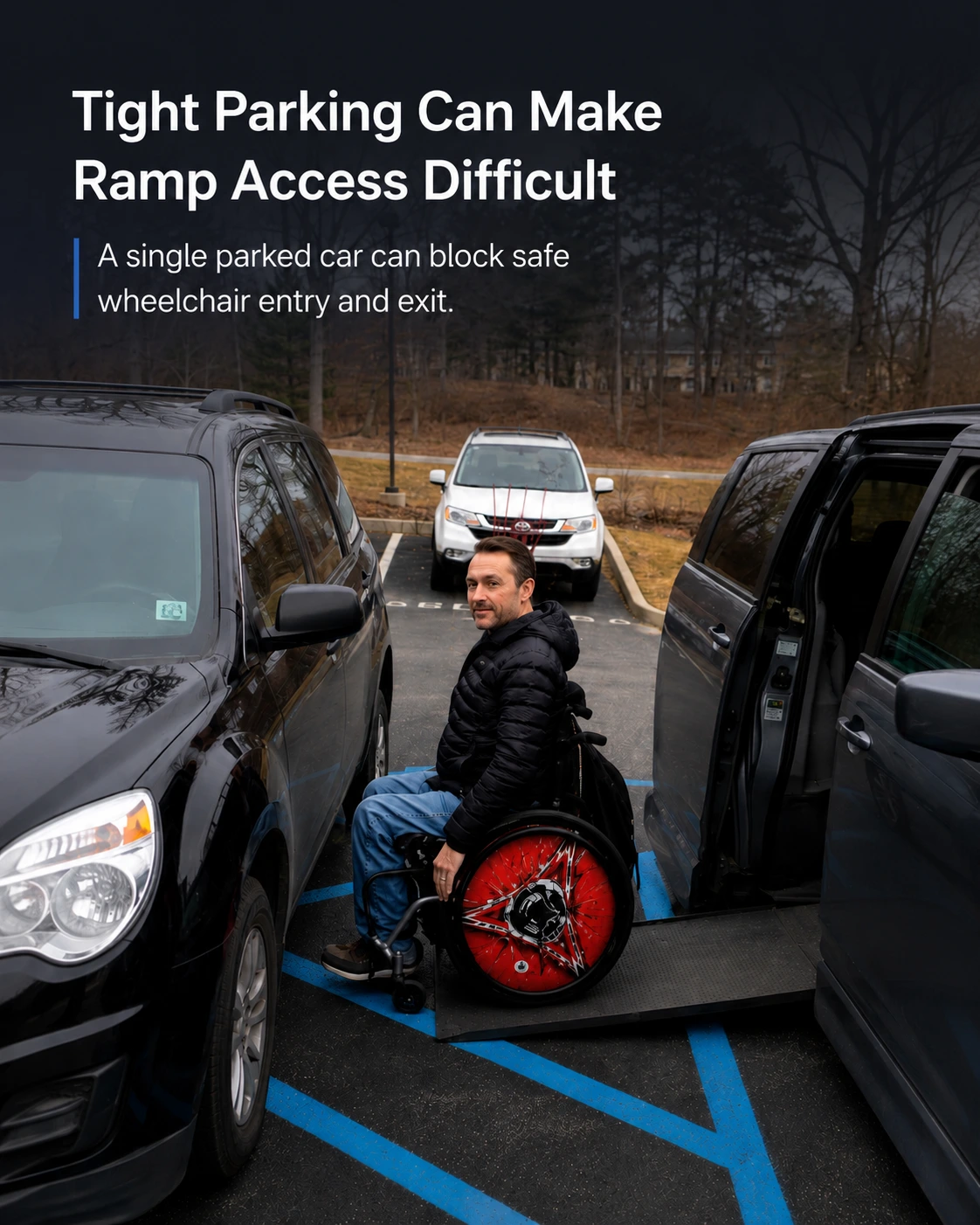
Traditional wheelchair accessible vehicles, also called WAVs, wheelchair accessible vans, disability vehicles, or handicap accessible vehicles in some countries, have helped many people travel more easily.
But many ramp-based vehicles still depend heavily on parking space.
Side-entry ramp vehicles
A side-entry wheelchair accessible vehicle usually needs clear space beside the vehicle. If another car parks too close, the ramp may not open properly. Even if it opens, the wheelchair user may not have enough room to move safely.
Rear-entry ramp vehicles
A rear-entry wheelchair accessible vehicle needs clear space behind the vehicle. If the bay is too short, if another vehicle parks behind, or if the vehicle is close to a wall or kerb, the rear ramp may become difficult or impossible to use.
For wheelchair users and families, the concern is not only:
“Will there be enough space when we arrive?”
It is also:
“Will there still be enough space when we come back?”
This creates parking anxiety before every trip.
The Human Cost of Poor Parking Access
Poor parking access is not just a physical problem. It is emotional too.
Wheelchair users should not have to cancel plans because a parking bay is not usable. Families should not have to keep repositioning the vehicle, searching for wider spaces, or asking strangers to move their cars. Caregivers should not have to guide a wheelchair user through tight gaps while traffic is moving nearby.
Accessible travel is not only about getting from one place to another. It is about safety, dignity, comfort, and independence.
A good wheelchair accessible vehicle should not only work in perfect parking conditions. It should work in real life.
A Practical Solution: NoRamp® Wheelchair Accessible Vehicle Access
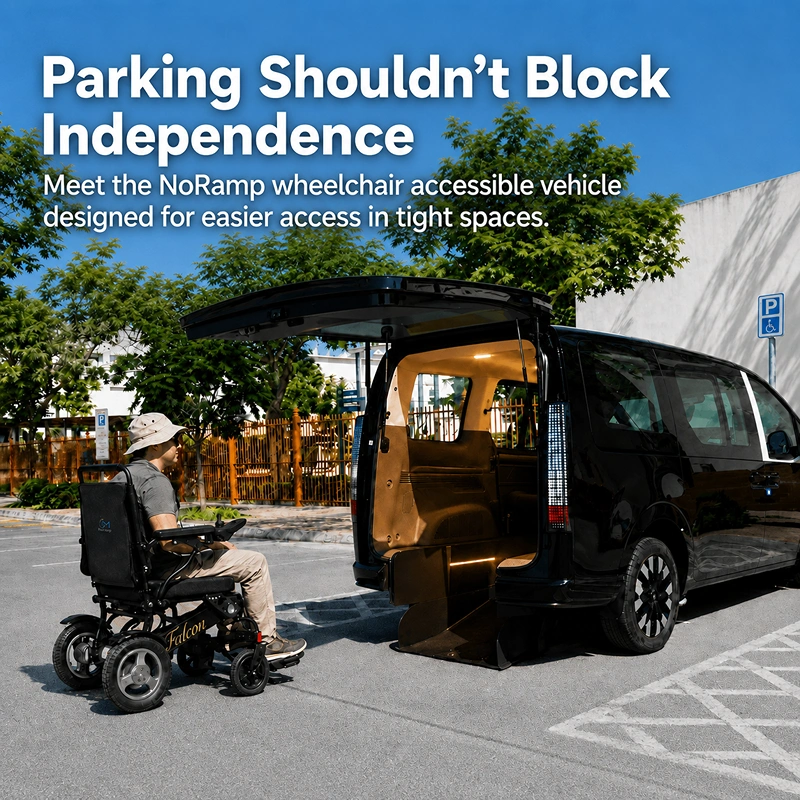
The G24 NoRamp® wheelchair accessible vehicle solution is designed around one of the biggest everyday problems wheelchair users face: the need for extra ramp space.
Unlike traditional ramp-based vehicles that require a long external ramp to deploy sideways or backwards, the NoRamp® system uses a vehicle-lowering mechanism that brings the rear access area closer to ground level.
This reduces the need for full external ramp deployment and helps make wheelchair entry and exit easier in many real-world parking situations.
The goal is simple:
- Less ramp stress
- Less parking anxiety
- Less dependence on perfect parking conditions
- Easier wheelchair entry and exit
- More confidence for families and caregivers
- More dignity for the wheelchair user
In the UAE, the G24 NoRamp® solution is approved by Dubai’s Roads and Transport Authority. It is also approved for road use in Australia and operated through Gilani Engineering, helping wheelchair users and families access a more practical mobility solution.
For families in Dubai, Abu Dhabi, Australia, the UK, the USA, New Zealand, and other regions looking for smarter wheelchair accessible vehicle options, NoRamp® technology answers a real global mobility problem.
Ramp-Based Vehicle vs NoRamp® Wheelchair Accessible Vehicle
| Feature | Traditional Ramp-Based Vehicle | NoRamp® Wheelchair Accessible Vehicle |
|---|---|---|
| Access Method | Uses an external ramp | Uses a lowered floor and rear access system |
| Parking Space Need | Requires extra side or rear clearance | Reduces dependence on long ramp clearance |
| Tight Parking | Can be difficult if another car parks close | More practical in many tight parking situations |
| Blockage Risk | Ramp can be blocked by cars, walls, kerbs, or traffic | Designed to reduce ramp-space barriers |
| User Stress | Can create parking anxiety | Helps make access smoother and less stressful |
| Daily Use | Works best in ideal parking conditions | Designed for real-world parking challenges |
| Caregiver Support | May need more room to manage the ramp | Can feel easier and less space-dependent |
| Best For | Places with enough ramp space | Families facing regular parking and clearance problems |
Why NoRamp® Access Can Help in Real Life
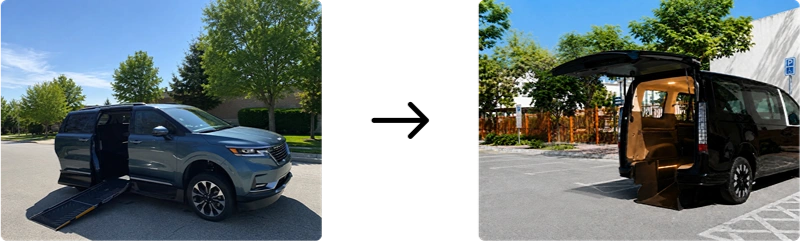
A NoRamp® wheelchair accessible vehicle can help in many everyday situations:
- Busy shopping centre car parks
- Hospital and clinic parking areas
- School pickup and drop-off zones
- Residential buildings and apartments
- Hotels, airports, and public car parks
- Tight urban parking spaces
- Family outings where parking is unpredictable
For wheelchair users, the value is not only the technology. The real value is what it gives back: time, comfort, safety, confidence, independence, and freedom to travel with less worry.
A mobility solution should not make the user feel limited by the environment. It should help the user move through real life with more confidence.
What Drivers Should Understand
Every driver can help make parking more accessible.
Accessible parking is not only about being closer to the entrance. It is about safety, space, dignity, and independence.
Please remember:
- Do not park on painted access lines
- Do not block the side or rear of a wheelchair accessible vehicle
- Do not use accessible parking if you do not need it
- Do not stop in an accessible bay “just for a minute”
- Do not block wheelchair ramps or lift areas
- Do not assume the extra space beside an accessible bay is unused
- Leave enough space for wheelchair users to move safely
For wheelchair users, space is not optional. It is the difference between being able to travel and being unable to move.
A Better Future for Wheelchair Accessible Travel
Wheelchair accessible vehicles should solve problems, not create new ones.
If a vehicle depends completely on long external ramps and perfect parking clearance, wheelchair users may still feel limited in daily life. That is why modern accessible vehicle design must consider the full journey: parking, entry, exit, safety, comfort, and independence.
The G24 NoRamp® wheelchair accessible vehicle solution represents a smarter approach to accessible travel. It is designed for real parking conditions, not only ideal ones.
Because the future of accessibility should not depend on whether another driver leaves enough room. It should be built around the person who needs to move.
Frequently Asked Questions
What is a NoRamp® wheelchair accessible vehicle?
A NoRamp® vehicle does not use a long external ramp for wheelchair entry. Instead, the vehicle lowers the rear access area closer to the ground, making wheelchair access smoother and reducing the need for extra ramp clearance.
Does a NoRamp® vehicle still need accessible parking?
Accessible parking is still helpful and should always be respected. However, NoRamp® technology is designed to reduce dependence on perfect side or rear ramp space, making access easier in many real-world parking situations.
Is NoRamp® useful for tight parking spaces?
Yes. NoRamp® access can be helpful where traditional side-entry or rear-entry ramps become difficult due to limited space, nearby cars, walls, kerbs, or blocked access aisles.
Is this only for Dubai and the UAE?
No. The parking problem exists globally. Wheelchair users and families in the UAE, USA, UK, Australia, New Zealand, and many other countries face similar issues with ramp clearance and accessible parking.
Is the G24 NoRamp® vehicle approved?
The G24 NoRamp® solution is approved by Dubai’s Roads and Transport Authority for use in the UAE. It is also approved for road use in Australia and operated through Gilani Engineering.
Who is this solution best for?
It is ideal for wheelchair users, families, caregivers, transport providers, and mobility service operators who want easier wheelchair access with less parking stress.
Looking for a NoRamp® Vehicle?
Do not let tight parking spaces, blocked ramps, or difficult vehicle access limit daily travel.
Gilani Mobility’s G24 NoRamp® wheelchair accessible vehicle solution is designed to make wheelchair entry and exit simpler, safer, and more practical in real-world parking conditions.