






















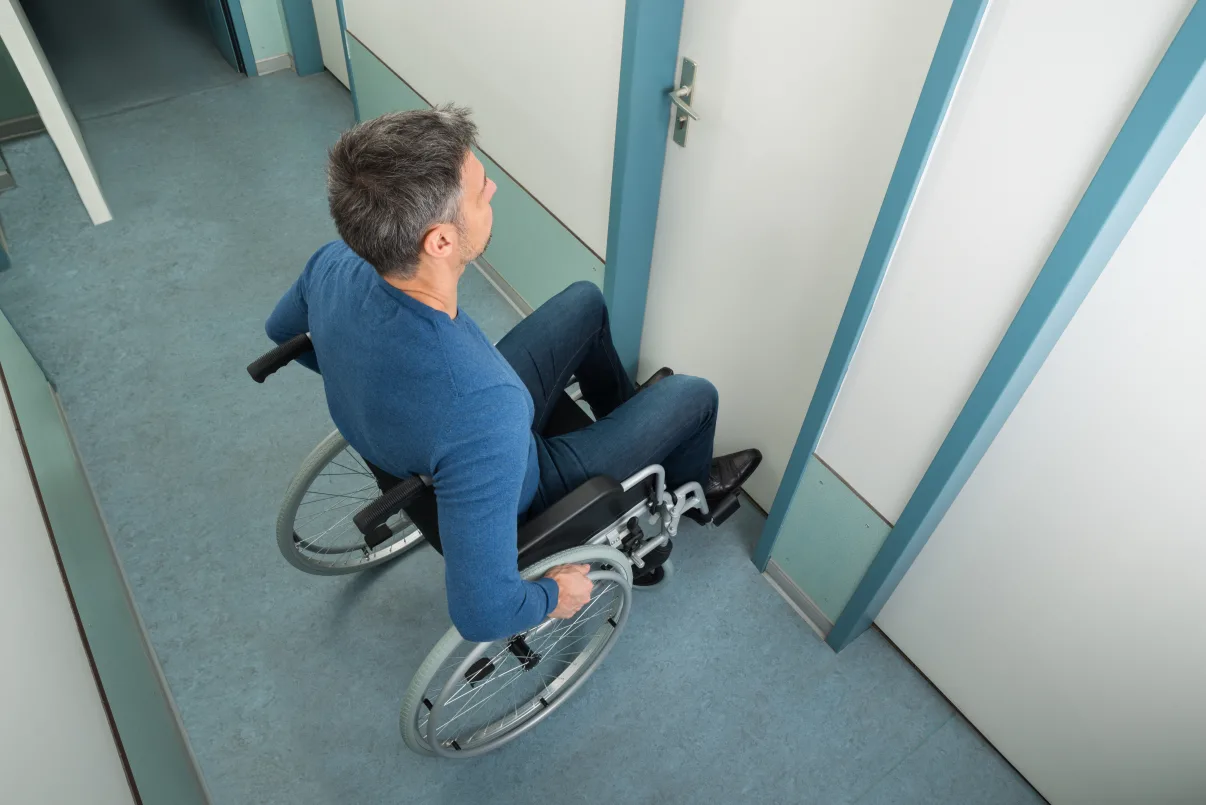






Doorway accessibility is one of the most important considerations when designing or modifying a home for wheelchair users. If a doorway is too narrow, it can make everyday activities difficult and frustrating.
Understanding the correct wheelchair door size ensures that wheelchairs can move safely through doorways without obstruction.
For many People of Determination, proper doorway width and accessible home design can significantly improve independence and mobility inside the home.
Standard Wheelchair Door Width Requirements
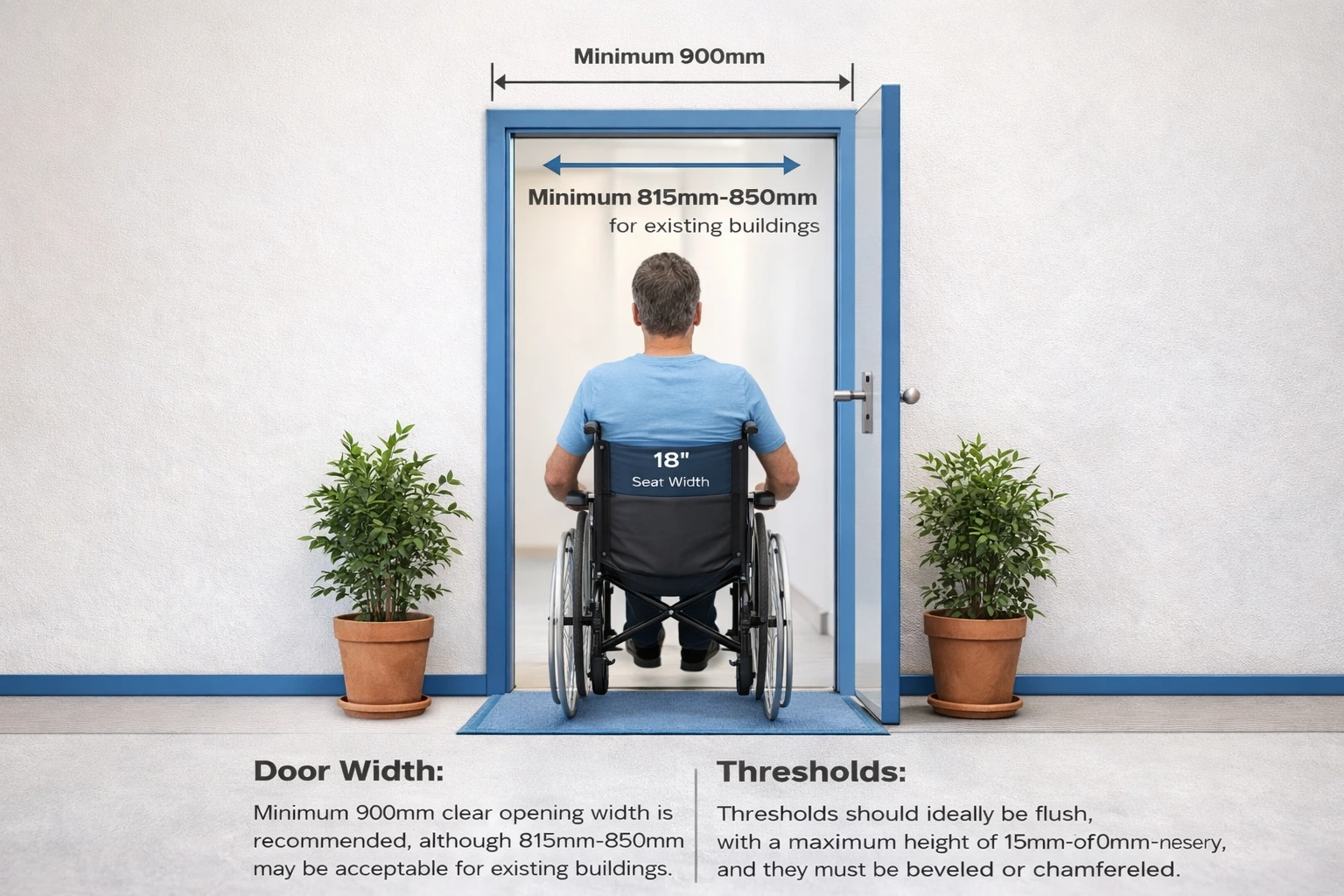
The minimum recommended wheelchair-accessible doorway width is 32 inches (81 cm). This measurement allows most standard wheelchairs to pass through comfortably.
However, many accessibility experts recommend 34–36 inches whenever possible to provide additional maneuvering space.
Typical door widths include:
| Door Type | Typical Width |
|---|---|
| Standard residential doors | 28–30 inches |
| Minimum wheelchair access | 32 inches |
| Recommended accessible doorway | 34–36 inches |
Many older homes have 30-inch doors, which means modifications may be required to accommodate wheelchairs.
Why Door Width Matters for Wheelchair Accessibility
Wheelchairs require more space than standard walking pathways because users must maneuver both the chair and their body.
Insufficient doorway width can lead to:
Difficulty entering rooms
Scraping door frames
Safety hazards when turning
Limited independence for wheelchair users
Ensuring proper doorway width improves accessibility and safety.
Wheelchair Turning Space and Hallway Width
Door width alone is not enough to ensure accessibility.
Wheelchair users also require adequate turning space and hallway clearance.
Accessibility guidelines typically recommend:
Hallway width: at least 36 inches
Turning space: approximately 60 inches diameter for a full turn
These measurements help ensure smooth movement between rooms.
Ramp Access and Entryway Considerations
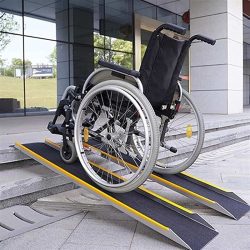
If steps are present near the entrance, installing a ramp may be necessary.
Important ramp considerations include:
Proper slope ratio for safety
Non-slip surfaces
Adequate landing space near the doorway
Steep ramps or narrow entrances can create safety risks for wheelchair users.
Practical Considerations for Wheelchair Doorway Modifications
Professional Accessibility Assessment
Before making structural modifications, it is recommended to consult a mobility specialist.
A professional assessment helps determine:
Correct doorway width
Turning space requirements
Ramp installation needs
Accessible hardware and door handles
Professional guidance ensures the modifications are both safe and compliant with accessibility standards.
Type of Wheelchair
The type of wheelchair used can influence the required doorway size.
For example:
Manual wheelchairs are typically narrower
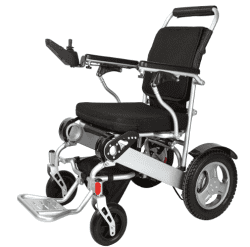
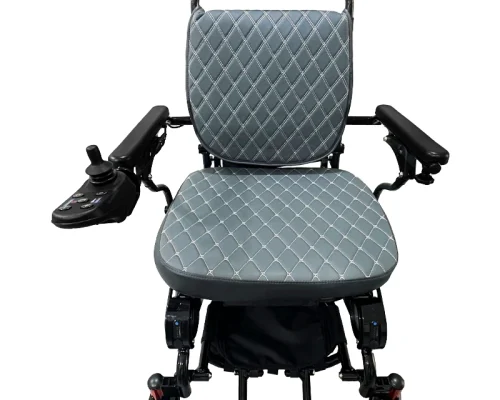
Electric wheelchairs may require additional clearance
Bariatric wheelchairs may require wider doorways
Understanding the wheelchair dimensions helps determine the correct doorway modifications.
Accessibility Codes and Regulations
Many accessibility guidelines are based on the Americans with Disabilities Act (ADA) standards, which recommend:
Minimum 32-inch door clearance
36-inch hallway width
Accessible door handles and hardware
Following these guidelines ensures safer and more inclusive spaces.
Simple Ways to Make a Doorway Wheelchair Accessible
If your doorway is too narrow, several modification options are available.
Common solutions include:
Widening the door frame
Installing swing-away hinges
Replacing round knobs with lever handles
Lowering thresholds to improve entry
These improvements can make homes significantly more accessible for People of Determination and individuals with mobility limitations.
Wheelchair and Accessibility Solutions in Dubai
Home accessibility improvements often go hand-in-hand with proper mobility equipment.
Gilani Mobility – Accessibility and Mobility Specialist in Dubai
Gilani Mobility provides professional mobility solutions and accessibility equipment across the UAE.
Services include:
Why choose Gilani Mobility?
Professional mobility consultation
High-quality assistive equipment
Delivery across Dubai and the UAE
Solutions for both residents and tourists
📞 Contact Gilani Mobility today to explore wheelchair solutions and home accessibility support in Dubai.
Frequently Asked Questions (FAQs)
What size is a wheelchair-accessible door?
The minimum wheelchair accessible doorway width is 32 inches (81 cm), though wider doors are recommended when possible.
Can a wheelchair fit through a 900mm door?
Yes. A 900mm door (35.4 inches) is wide enough for most wheelchairs.
Can a wheelchair fit through a 30-inch door?
Most wheelchairs cannot comfortably pass through a 30-inch doorway, which is why many homes require doorway widening for accessibility.
What is the standard doorway size for wheelchair access?
Accessibility guidelines recommend a minimum clear doorway width of 32 inches.
How can you widen a doorway for wheelchair access?
Doorways can be widened by:
Expanding the door frame
Installing offset hinges
Replacing the door entirely
These modifications should be performed by professionals to ensure safety.
Conclusion
The correct wheelchair doorway size plays a crucial role in making homes safe and accessible. A minimum 32-inch doorway width allows most wheelchairs to pass comfortably, while wider doorways provide greater flexibility.
Creating accessible spaces not only improves safety but also supports independence for wheelchair users.
For mobility equipment and accessibility solutions in the UAE, Gilani Mobility offers reliable wheelchair rentals and assistive equipment, helping individuals move freely and safely.
