
If you need to build a ramp for a wheelchair, vehicle, or accessibility purpose, one question matters most: how to calculatе ramp lеngth?
How long should the ramp be?
Getting this wrong can make the ramp unsafe, too steep, or non-compliant with regulations.
This guide will show you how to calculate ramp length step-by-step, using simple formulas and real-world examples.
What Is a Ramp?
A ramp is a sloped surface designed to connect two different heights safely. It provides an alternative to stairs, making movement easier for:
- Wheelchair users
- People with limited mobility
- Parents with strollers
- Workers moving heavy equipment
Ramps are used in homes, hospitals, public buildings, vehicles, and construction sites.
Why Ramp Length Is Critical
Ramp length directly affects safety, usability, and compliance.
- If the ramp is too steep → it becomes dangerous
- If it’s too long → it becomes impractical
- If it’s incorrect → it may fail building regulations
Correct ramp length ensures smooth, safe, and accessible movement for everyone.
Standard Ramp Slope (Most Important Rule)
The most commonly used standard is:
1:12 slope ratio
This means:
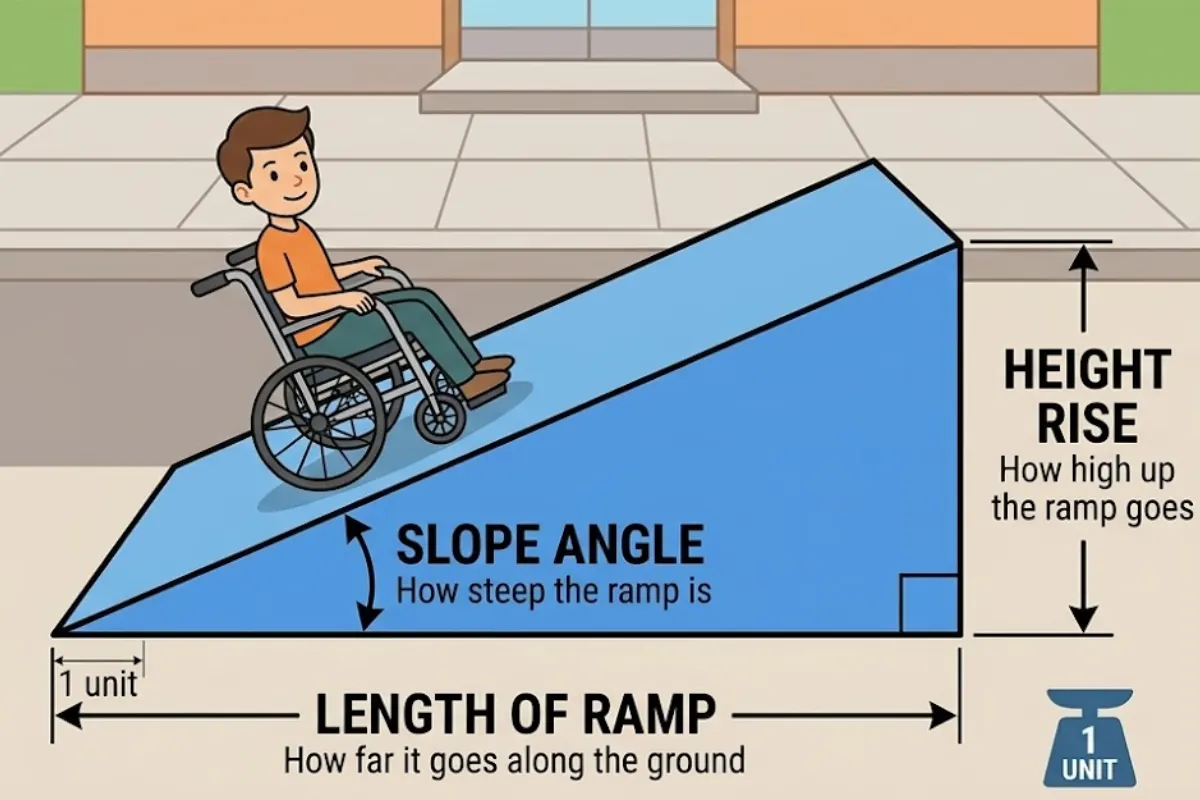
- For every 1 unit of height, you need 12 units of ramp length
This is widely accepted for electric wheelchairs accessibility and safety.
Simple Ramp Length Formula
You don’t need complex math. Use this basic formula:
Ramp Length = Vertical Rise × Slope Ratio
- Vertical Rise = height to overcome
- Slope Ratio = recommended standard (e.g., 12 for 1:12)
Example Calculation
Let’s say your height (vertical rise) is 2 feet.
Using a 1:12 slope:
Ramp Length = 2 × 12 = 24 feet
This means you need a ramp that is 24 feet long to ensure safe usage.
Advanced Formula (Using Angle)
If you want a more precise calculation using angle:
Ramp Length (L) = Height (H) / sin(angle)
Example:
- Height = 2 feet
- Angle = 10°
L ≈ 11.55 feet
This method is typically used in engineering or technical designs.
Key Factors That Affect Ramp Length
1. Vertical Rise (Height)
The higher the elevation, the longer the ramp required.
2. Slope Ratio
Steeper slopes reduce length but increase risk. Gentler slopes increase safety but require more space.
3. Available Space
Limited space may require switchback ramps or alternative designs.
4. User Type
Wheelchair users require safer, gentler slopes compared to pedestrian or vehicle ramps.
Where Ramp Length Calculation Is Used
- Wheelchair ramps (homes, hospitals, public access)
- Vehicle loading ramps
- Parking and basement access
- Construction site ramps
- Urban pedestrian pathways
Building Codes and Accessibility Standards
Ramp construction must follow safety regulations.
- ADA Guidelines (International Standard) – recommend 1:12 slope
- UAE Local Regulations – must be followed for compliance
Failure to follow these standards can result in:
- Safety hazards
- Project rejection
- Legal penalties
Always consult local authorities or professionals before building a ramp.
Common Mistakes to Avoid
- Making the ramp too steep
- Ignoring slope ratios
- Incorrect height measurement
- Not following local regulations
Frequently Asked Questions
What is the standard ramp slope?
The most common and safe slope is 1:12.
How do I calculate ramp length quickly?
Multiply the height by 12 to get the required length.
Can I build a steeper ramp?
Steeper ramps are not recommended as they can be unsafe and non-compliant.
Do ramps need to follow UAE regulations?
Yes. All ramps must comply with local building codes and accessibility standards.
Final Thoughts
Calculating ramp length is not just about measurement – it’s about safety, accessibility, and compliance.
Using the correct formula and slope ensures that your ramp is practical, safe, and suitable for all users.
If you are unsure, contact us or call us on to ensure your ramp meets all required standards.