



















Why Finding the Right Wheelchair Accessible Vehicle in the GCC Matters
For wheelchair users and their families across the UAE, Saudi Arabia, Qatar, Kuwait, Bahrain, and Oman, choosing the right wheelchair accessible vehicle (WAV) is one of the most important decisions they will ever make. It is not just about getting from A to B – it is about independence, comfort, dignity, and safety.
The GCC market has evolved significantly in recent years. Accessibility awareness is growing, government legislation is becoming stronger, and technology is now delivering wheelchair car conversions that were simply unimaginable a decade ago. Whether you are looking for a wheelchair accessible van, a compact wheelchair car, or a premium disability vehicle for the whole family, this guide covers everything you need to know.
What Is a Wheelchair Accessible Vehicle (WAV)?
A wheelchair accessible vehicle is any car, van, or MPV that has been engineered or modified to allow a wheelchair user to travel safely – either as a passenger remaining in their wheelchair, or with adapted features that make entry and exit significantly easier.
WAVs in the GCC typically fall into three categories:
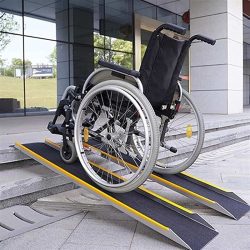
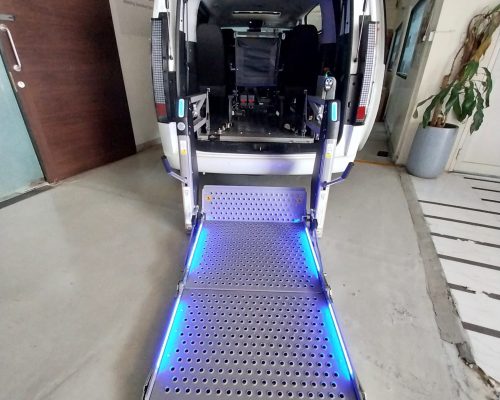
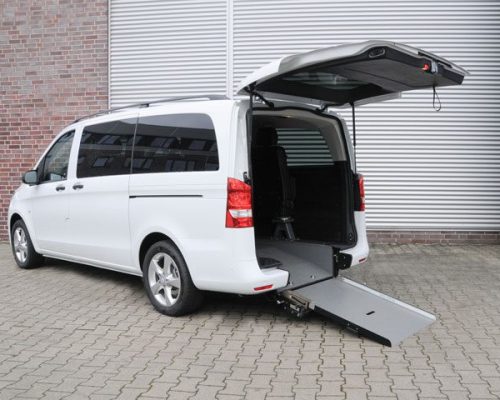
1. Ramp-entry vehicles – The vehicle has a fold-out or slide-out ramp, usually at the rear or side door, allowing the wheelchair to be rolled in and secured inside. This is the most common type globally.
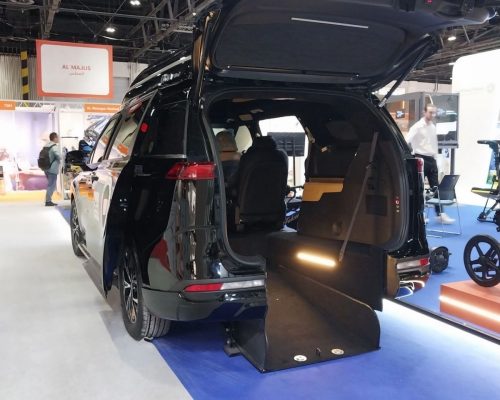
2. Lowered-floor / ramp-free vehicles – The vehicle floor is lowered mechanically or structurally so the wheelchair user can board from near ground level, with no external ramp required. This is the most advanced and user-friendly solution currently available.
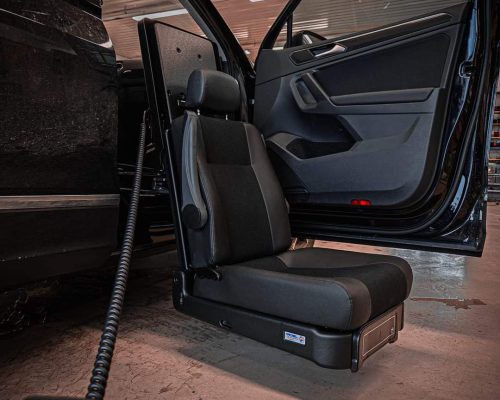
3. Swivel or transfer seat vehicles – For wheelchair users who can transfer from their chair into a conventional car seat, a motorised swivel seat (like the Turny) rotates outward to make entry and exit much easier without requiring the whole interior to be converted.
Why the GCC Presents Unique Challenges – and Opportunities
Buying a wheelchair accessible car in the UAE or broader GCC is not the same as purchasing one in Europe or Australia. There are some region-specific factors every buyer should consider:
Climate: Extreme heat (regularly exceeding 45°C) affects mechanical components, particularly electric ramp systems and lowering mechanisms. Not all WAV conversions are engineered to perform in these conditions – it is critical to choose a conversion that has been specifically tested and certified for Middle Eastern temperatures.
Road infrastructure: The GCC has invested heavily in wide roads and modern kerbing, but parking access and tight urban spaces can still be a challenge. Vehicles that require an extended external ramp to deploy at the rear can be impractical if you cannot always access a wide-open parking bay.
Vehicle availability: Popular WAV base vehicles in the GCC include the Kia Carnival, Hyundai Staria, and Honda Odyssey – all roomy, family-friendly MPVs that are widely available in the region.
After-sales support: This is one of the most overlooked factors. A WAV conversion involves complex mechanical and electronic systems. Without strong local warranty and after-sales support, owners can be left stranded when something needs servicing or repair. Always choose a provider that has a physical presence in the UAE or GCC and offers documented warranty terms.
Top Wheelchair Accessible Vehicle Types Available in the UAE & GCC
1. The Kia Carnival – Wheelchair Accessible Version
The Kia Carnival has become one of the most popular bases for wheelchair accessible van conversions in the UAE. Its generous interior space, low load floor, and wide rear opening make it an excellent candidate for WAV conversion. When converted with a lowered-floor system, the Carnival can accommodate a full-size power wheelchair or manual wheelchair with the user remaining seated.
Key advantages of a wheelchair-accessible Kia Carnival:
- Spacious interior with flexible seating configurations
- Up to 5 regular passenger seats alongside wheelchair space
- Wide rear tailgate opening for easy access
- Available with NoRamp® conversion for ramp-free boarding
- Suitable for daily family use and community transport
2. Hyundai Staria – Premium Wheelchair Accessible MPV
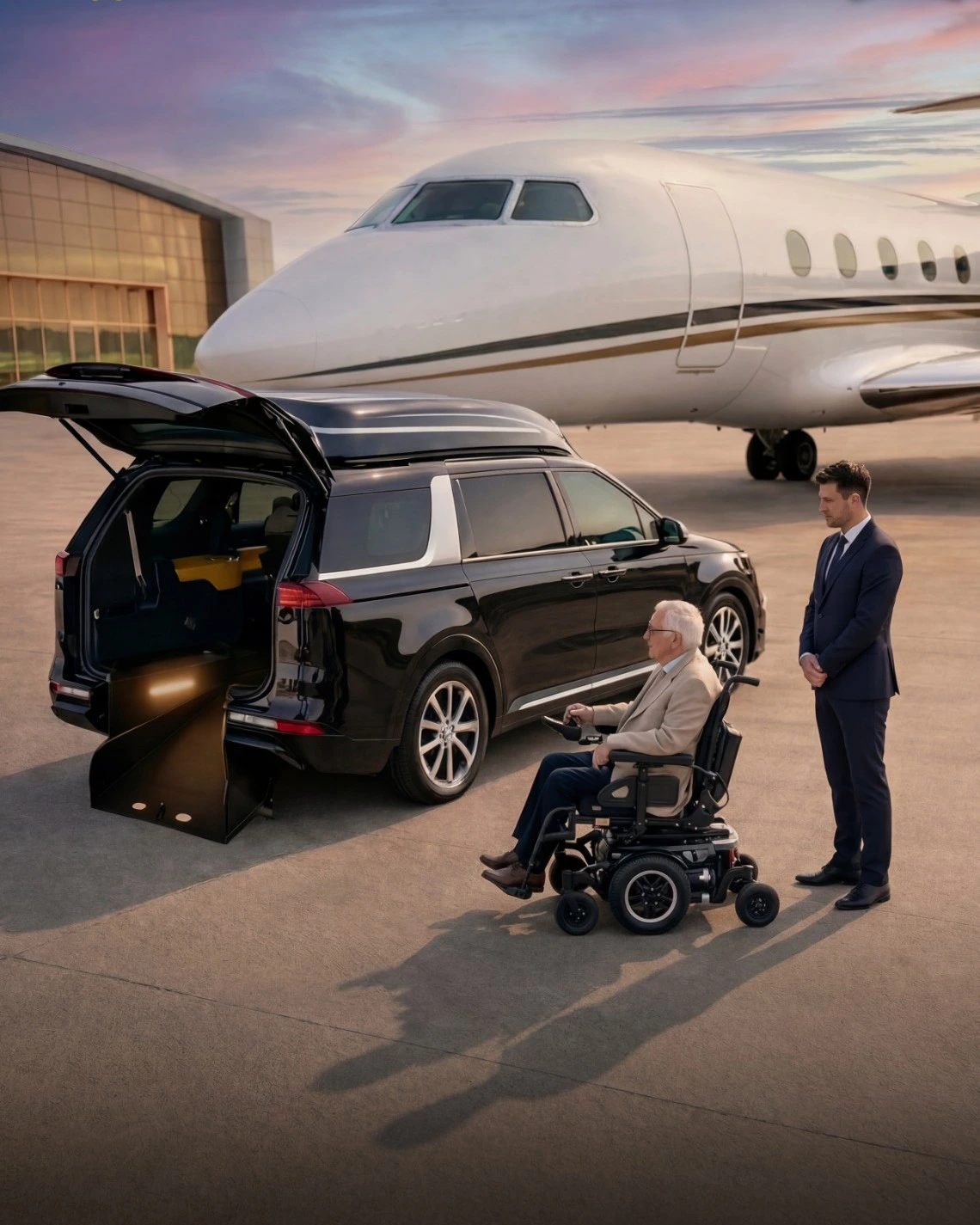
The Hyundai Staria is rapidly gaining popularity as a premium wheelchair accessible car in the UAE and Saudi Arabia. Its futuristic design, panoramic glass, and exceptional interior height make it one of the most dignified and comfortable WAV base vehicles on the market today.
Converted with a lowered-floor system, the Staria offers:
- 1,600mm+ internal height (meeting international WAV standards)
- A smooth, near-ground-level boarding experience
- Seating for up to 8 passengers or 5 passengers plus a wheelchair space
- A strong, stylish presence – important for users who do not want their vehicle to look purely medical or institutional
- Full compatibility with hand controls, turning seats, and automated door systems
For families in Dubai, Abu Dhabi, and across the GCC looking for a luxury wheelchair accessible vehicle, the Hyundai Staria is one of the strongest choices available today.
3. Honda Odyssey – The Family-Friendly Wheelchair Van
The Honda Odyssey has long been recognised internationally as an excellent base for wheelchair van conversions. Its smooth side-entry access and comfortable cabin make it a natural fit for families where one member uses a wheelchair. The Odyssey is available for NoRamp® conversion and is compatible with a full suite of adaptive driving equipment.
The Biggest Innovation in Wheelchair Accessible Vehicles: NoRamp® Technology
For most of the history of wheelchair accessible vehicles, a ramp was simply unavoidable. You needed space behind the vehicle to deploy it, you needed a reasonably flat surface, and you had to hope the ramp was long enough to give a manageable gradient.
The NoRamp® conversion system changes all of this.
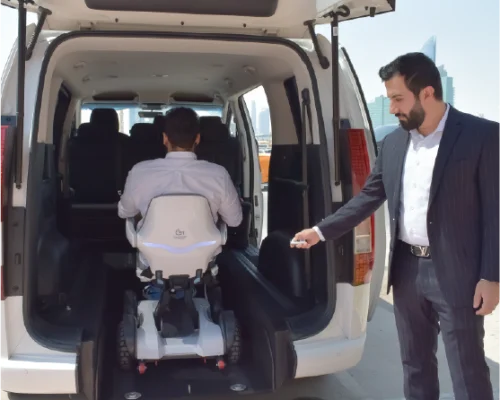
The NoRamp® design works by lowering the internal floor of the vehicle, combined with a lowering rear tailgate system, so that the wheelchair user can board at near-ground level without any external ramp being required. The access system is integrated entirely within the vehicle’s structure.
This has several significant advantages over traditional ramp systems:
No parking space restrictions. With a traditional rear-ramp WAV, you need empty space behind the vehicle to deploy the ramp – typically 2–3 metres. A NoRamp® vehicle can be accessed in a standard parking bay with no extra space needed behind.
Cleaner rear sightlines for drivers. External ramps obstruct the driver’s rear view during deployment. An integrated system eliminates this entirely.
Faster, more dignified boarding. A simple button press deploys the access system. There is no manual ramp to unfold or extend.
Weather and climate resilience. With no external ramp exposed to the elements, the system is better suited to the dust, heat, and occasional humidity of the GCC environment.
Fully automated options. The AutoTailgate® feature allows fully automated door opening with a single button press — critical for users who value complete independence.
The NoRamp® system is currently compatible with the Kia Carnival, Hyundai Staria, and Honda Odyssey, with more models planned. It can be combined with turning seats (Turny), hand controls, automatic door openers, and full wheelchair restraint and tie-down systems.
International Standards for Wheelchair Accessible Vehicles: What You Should Expect
When evaluating any wheelchair car or van in the UAE or GCC, always check whether it meets internationally recognised WAV standards. Key dimensions to look for include:
Internal height: A minimum of 1,600mm is required to allow most power wheelchair users to remain seated comfortably without stooping.
Tray width: Minimum 800mm of clear width within the wheelchair space is the international standard, allowing safe entry and exit.
Tray length: The wheelchair bay should offer at least 1,400mm of usable length to accommodate standard and large wheelchairs.
Tie-down and restraint systems: All compliant WAVs should include certified four-point wheelchair tie-down systems and a shoulder/lap seatbelt for the wheelchair passenger. These are non-negotiable safety requirements.
Structural integrity: Any conversion should preserve the vehicle’s crash safety standards. Reputable conversion specialists will provide certification confirming that the structural modifications do not compromise the vehicle’s original safety ratings.
What to Look For When Buying a Wheelchair Accessible Vehicle in the UAE
Here is a practical checklist for anyone considering purchasing a disability vehicle in the UAE or GCC:
Is the conversion certified? Always ask for documentation confirming the conversion meets recognised standards and has been tested by an accredited body.
Does it come with warranty? A WAV is a complex product. A full manufacturer warranty on both the base vehicle and the conversion system is essential. Extended warranty options are worth considering, particularly for the mechanical and electronic access components.
Is after-sales support available locally? This is perhaps the single most important factor for GCC buyers. If something goes wrong with your access system, you need a team that can respond quickly – ideally with a physical showroom and service centre in the UAE.
Is the conversion reversible (if needed)? For some buyers, particularly those renting rather than owning, it may be important that the conversion does not permanently alter the vehicle.
Can it be driven as well as used as a passenger vehicle? Many WAVs are adapted purely for passenger transport. If the wheelchair user also wishes to drive the vehicle independently, additional hand controls, spinner knobs, or left-foot accelerators will be required.
Does the provider have local experience? The GCC’s road conditions, climate, and vehicle registration regulations are different from Europe or the USA. Work with a provider who has demonstrable experience in the region.
Renting vs. Buying a Wheelchair Accessible Vehicle in the UAE
For some families and individuals, purchasing a wheelchair accessible van outright is the right answer. For others – visitors to Dubai, those recovering from temporary injuries, or those who need the vehicle only occasionally – rental is a far more practical option.
WAV rental services in the UAE typically offer:
- Daily, weekly, and monthly hire options
- Both ramp-access and ramp-free vehicle types
- Chauffeur-driven accessible transport for medical appointments, airport transfers, and tourism
- Hand-control vehicles for disabled drivers who wish to self-drive
If you are visiting the GCC for a short period and require a wheelchair accessible car hire, advance booking is strongly recommended as accessible vehicle fleets are smaller than standard rental fleets.
Frequently Asked Questions (FAQS)
Can I import a wheelchair accessible vehicle into the UAE from Europe or Australia?
Yes, but it requires RTA (Roads and Transport Authority) approval for any vehicle modifications. Working with a locally licensed WAV specialist is strongly recommended to ensure compliance.
How long does a wheelchair vehicle conversion take?
Most standard conversions take between 4–8 weeks depending on the base vehicle and the specification of the conversion. Custom or complex conversions may take longer.
Are wheelchair accessible vehicles available in Saudi Arabia, Qatar, and Kuwait?
Yes. The GCC market is growing rapidly, and several specialist providers now operate across multiple GCC countries. However, UAE-based specialists with GCC-wide delivery and service capability offer the widest range of options.
Is a NoRamp® conversion more expensive than a traditional ramp system?
The NoRamp® system typically commands a premium over basic ramp conversions, reflecting the engineering complexity and the significantly improved user experience. For most families using the vehicle daily, the investment in a ramp-free system pays for itself in convenience, independence, and peace of mind.
Where to Find the Best Wheelchair Accessible Vehicles in the UAE
Finding a reliable, certified, and comprehensively supported wheelchair accessible vehicle in the UAE requires careful research. Look for a provider with a long track record in the region, a physical showroom, a certified and warranted conversion process, and genuine after-sales support – not just a sales team that disappears once the vehicle is delivered.
Gilani Mobility is the UAE’s specialist in wheelchair accessible vehicle conversions, offering the exclusive G24 NoRamp® conversion system – the only patented ramp-free WAV conversion in the Middle East – available on the Hyundai Staria, Kia Carnival, and Honda Odyssey. All conversions come with full warranty and dedicated after-sales support across all seven Emirates. Their team also offers WAV rental, chauffeur-driven accessible transport, adaptive driving solutions, and home accessibility modifications.
To explore available wheelchair accessible vehicles or request a free consultation, visit Gilani Mobility or explore the G24 NoRamp® conversion.
Final Thoughts
The right wheelchair accessible vehicle is one of the most transformative investments a person with a mobility disability or their family can make. In the GCC, the market has matured enormously – the technology is excellent, the base vehicles are ideal, and local expertise is now available to deliver world-class conversions with proper warranty and after-sales care.
Whether you need a wheelchair car for daily commutes, a wheelchair accessible van for family travel, or a disability vehicle equipped for independent driving, the options available in the UAE and across the GCC today are genuinely outstanding. Take the time to get the specification right, work with a certified provider, and insist on full warranty and local support – and you will have a vehicle that delivers real independence for years to come.
